Ambient Lighting Ideas for the Living Room That Actually Work
Quick Answer
A living room needs at least three light sources: an ambient ceiling layer (dimmer-controlled, 2700K warm white), task lamps beside seating, and one or two accent sources. The most common problem — flat, cold, or harsh evening light — is fixed by switching to 2700K bulbs, adding floor and table lamps, and dimming the overhead fixture.

Why One Overhead Light Fails
The standard living room lighting setup — one central ceiling fixture — creates a specific set of problems that are identifiable and fixable once you know what to look for.
It creates a single direction of light. Light from a ceiling fixture falls straight down. Surfaces below it are lit; wall planes, furniture sides, and anything at eye level is not. The room appears flat because there are no shadows, no variation in light intensity across surfaces, and no depth.
It creates unflattering light at sitting height. When you are seated, the ceiling fixture is above and behind you — the worst possible lighting angle for faces and for making a room feel welcoming. Lamps at eye level or below create softer, more directional light that makes both people and rooms look better.
It makes the evening feel harsh. Ceiling fixtures are typically high-wattage to illuminate the whole room. In the evening, when natural light is gone, a single bright ceiling fixture is the dominant light source — producing an intensity and directionality that feels closer to an office than a living room.
It makes colors look wrong. The overhead angle flattens the appearance of wall paint, fabric textures, and wood grain — all of which look better when lit from angles that reveal their texture.
The solution is not to find a better ceiling fixture. It is to use the ceiling fixture as one of three or more light sources, and to control its intensity with a dimmer.
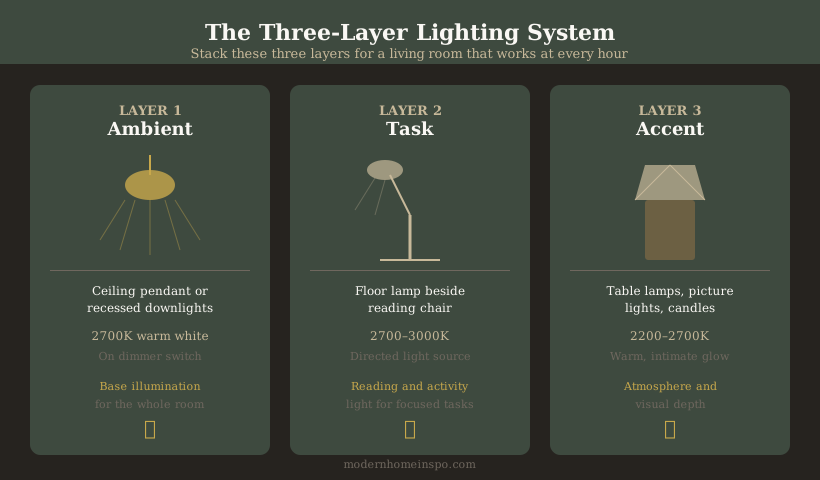
The Three-Layer System
Professional interior lighting design is organized around three functional layers. This framework applies practically to any living room.
Layer 1: Ambient (Background Light)
Ambient light provides the overall, room-wide illumination that makes the space usable. In a living room, this is the ceiling fixture — a chandelier, pendant, flush mount, or recessed lights.
The ambient layer should:
- Be dimmable (a dimmer switch is essential, not optional)
- Use 2700K warm white bulbs
- Be set at approximately 60–70% brightness during evening use when other layers are active
- Be capable of full brightness for daytime tasks like cleaning or searching for objects
Layer 2: Task Light
Task light is functional light for specific activities — reading, working at a desk, having a conversation. In a living room, this means floor lamps or table lamps beside the main seating positions.
Task lamps should:
- Be positioned beside or slightly behind the main seating, at approximately seated eye level
- Use a shade that directs light downward toward a reading position and outward into the room
- Use 2700K warm white bulbs
- Have a switch accessible from the seating position
Placement: A floor lamp at the end of a sofa, or a table lamp on a side table beside a sofa or armchair. The lamp should be reachable from the seat. The shade bottom should be at approximately seated head height (around 48–52 inches from floor) to avoid glare into seated eyes.
Layer 3: Accent Light
Accent light draws attention to a specific object, surface, or architectural feature — a piece of art, a bookshelf, a plant, a fireplace. It adds visual depth and interest to the room in the evening by creating bright points against a darker background.
Accent sources include:
- A picture light above a framed print or painting
- A small LED spot aimed at a bookshelf or object grouping
- An uplighter (floor canister) behind a large plant
- Candles on a coffee table or mantel (real or high-quality LED)
- String lights used decoratively (used well, not excessively)
The accent layer is the most optional of the three — a room can function without it — but it is often what makes the difference between a living room that looks “done” and one that looks like it has furniture in it.
Bulb Temperature: The Critical Choice
Bulb color temperature is measured in Kelvin (K). This is the single most important variable in living room lighting.
| Temperature | Description | Living Room Use |
|---|---|---|
| 2700K | Warm white (close to incandescent) | Best for most living rooms — warm, cozy, flattering |
| 3000K | Soft white | Acceptable; slightly less warm, more neutral |
| 3500K | Neutral white | Too cool for warm living rooms; acceptable in very modern spaces |
| 4000K | Cool white | Avoid in living rooms designed for warmth |
| 5000K+ | Daylight | Avoid in living rooms — clinical and harsh in evening |
The Fastest Fix for a Cold Living Room
If your living room feels cold, harsh, or clinical in the evening, change the bulbs before changing anything else. Replacing 4000K or 5000K bulbs with 2700K warm white bulbs throughout the room makes more immediate visual difference than almost any furniture or paint change. It costs less than $20 and takes 10 minutes.
The temperature also affects how wall colors appear. Warm neutrals (greige, cream, taupe) look richer and more intentional under 2700K. Cool neutrals (gray, blue-gray) look muddier under 2700K — if you have cool gray walls, use 3000K rather than 2700K.
Ambient Fixture Options
The ceiling fixture sets the ambient character of the room. Options from most to least effective:
Chandelier
A chandelier is the most effective ambient fixture for a living room because it distributes light at multiple points rather than from a single source, creating more even and flattering illumination.
For living rooms: A chandelier does not need to be large or elaborate. A simple branched fixture with small shades, a cluster pendant with multiple bulbs, or a linear multi-bulb fixture all provide chandelier-quality light distribution without requiring a high ceiling or formal room character.
Scale rule: The chandelier diameter (in inches) should approximately equal the room’s length plus width in feet (a 12x15 room = 27-inch diameter fixture). The bottom of the fixture should be at least 7 feet from the floor in a circulation path.
Semi-Flush and Flush Mount
Semi-flush mounts hang 6–12 inches below the ceiling — enough to give the fixture presence and allow multi-directional light. Better than a flat flush mount for most rooms.
Look for fixtures that direct light both downward and outward, rather than purely downward. A fixture with a glass or open shade that allows upward light creates softer ambient illumination than a fully downward-directing shade.
Recessed Lights
Recessed (can) lights are the most common ceiling fixture in modern homes. They work for ambient lighting when:
- Multiple fixtures are used (one recessed light per room is not ambient lighting)
- They are on a dimmer
- They use warm-color 2700K bulbs in the widest available flood angle
The common failure with recessed lighting: too few fixtures (creating pools of light with dark zones), too cold a temperature, and no dimmer. Fixed with correct temperature bulbs, a dimmer, and supplementary floor lamps.
Spacing: Recessed lights are typically spaced one fixture for every 4–5 feet of ceiling height. A room with 8-foot ceilings should have fixtures approximately every 4 feet in each direction.
Pendant Lights
A pendant light can serve as ambient light in a smaller living room, but works better as accent light over a specific table or seating area. Multiple pendants at different heights can work in larger open-plan spaces.
Floor and Table Lamps
Lamps are the task layer and — critically — the source of the warm, eye-level light that makes a living room feel inviting in the evening.
Floor Lamps
A floor lamp beside the sofa is the single most effective addition to most underlit living rooms. It provides:
- Light at seated eye level (not overhead)
- A warm pool of light that creates depth in the room
- A visual anchor for the seating group
Types of floor lamps by function:
Arc floor lamp: A curved arm that extends over the sofa, directing light downward. Good for task lighting a specific reading position. The arm allows the base to sit behind the sofa or to one side.
Standard upright lamp with shade: Provides both downward task light and some outward room light depending on the shade. The most common and versatile option. Look for a shade that allows some light to escape upward — closed-bottom shades direct all light down and can create harsh pools.
Torchière (uplighter): Directs all light upward toward the ceiling, which then reflects back into the room as soft ambient light. Creates no glare at eye level. Less effective as task light but excellent for adding warmth to a room with harsh overhead lighting.
Position: The lamp base should be at or slightly behind the arm of the sofa — not in front of it, which blocks walking path, and not too far behind the sofa, which positions the light too far back to be useful.
Table Lamps
Table lamps on side tables beside seating provide targeted light at the seating position and add decorative detail to the room.
Effective table lamp placement:
- On a side table beside an armchair
- On a console table behind a sofa
- On a sideboard or credenza at the edge of the seating zone
Height: The shade bottom should sit at approximately eye level when seated — around 48–52 inches from the floor. A lamp that is too short sits below eye level; too tall puts the bulb at eye level and creates glare.
Shade: A drum or empire shade in linen, cotton, or paper distributes light evenly. A narrow shade focuses light downward. For living rooms, a wider shade with more lateral light spread is generally better.
Accent Lighting
Accent lighting creates visual interest by highlighting specific points in the room against the darker background of the unlit surfaces around them. It transforms a room from “lit” to “composed.”
Picture lights: A small fixture mounted above a framed piece that illuminates it from above. Most effective with art that has some depth or texture — oil paintings, textile art, shadow boxes. Less effective with flat digital prints.
Shelf lighting: LED strip or small spotlights in or above a bookshelf illuminate the contents and create a warm glow at a mid-wall height. Particularly effective with a mix of books, objects, and plants.
Plant uplighting: A small floor canister uplighter aimed at a large plant creates dramatic shadow patterns on the wall behind it. Most effective with plants with interesting branch or leaf silhouettes — fiddle leaf figs, palms, monstera.
Candles: Real candles on a coffee table or mantel are the most atmospheric accent light possible. High-quality LED candles with realistic flicker are an acceptable alternative in houses with children or pets.
Design Tip
Accent lighting works by contrast — a lit object against an unlit background. In a brightly lit room, accent lighting is invisible. Use accent lighting in the evening with the ceiling fixture dimmed down — this is when the spots of warm light become visible and effective.
Dimmers and Control
A dimmer switch on the ceiling fixture is the single most cost-effective lighting improvement in most living rooms.
Why it matters: In the evening, when floor and table lamps are on, the ceiling fixture at full brightness cancels out the lamp light — making the room feel equally lit in all directions (clinical) rather than warmer near seating (comfortable). Dimming the ceiling fixture to 40–60% while the lamps are running creates the contrast between lit seating zone and dimmer room periphery that makes living rooms feel warm and considered.
LED dimmer compatibility: Not all LED bulbs are compatible with all dimmer switches. When buying, check that the bulb is labeled “dimmable” and that the dimmer switch is rated for LED loads. The safest approach is to use bulbs and dimmers from the same manufacturer’s recommended pairing list.
Smart bulbs as an alternative: Smart bulbs (Hue, LIFX, etc.) can be dimmed and color-temperature-adjusted from a phone or voice control, eliminating the need for a hardware dimmer. Useful in rentals where switch changes are not permitted. The drawback is the ongoing app dependency and cost per bulb.
Practical dimmer use: Set the ceiling fixture to full brightness during daytime. When lamps are turned on in the evening, dim the ceiling fixture to 40–60%. When watching a screen, dim further to 20–30% and rely on lamp light.
Smart Lighting and Scenes
Smart bulbs and smart switches add programmable control to a conventional three-layer lighting setup. The practical benefit is not novelty — it is the ability to save and recall specific lighting compositions (called “scenes”) rather than manually adjusting multiple sources every evening.
The scene approach
A smart lighting system configured with three or four scenes replaces the habit of manually dimming and switching:
- Daytime: Ceiling at 100%, lamps off. Full working illumination.
- Evening: Ceiling at 50%, floor and table lamps on. Living room atmosphere.
- Film: Ceiling at 10–15%, lamps at 30%. Low ambient, screen-comfortable.
- Night: Lamps only at minimum brightness. Winding-down or reading in low light.
Each scene is recalled by a single voice command, app tap, or a dedicated physical button (Hue Tap, Lutron Pico). This removes the friction that prevents most people from adjusting their lighting setup and makes the three-layer system actually function as intended.
Smart bulbs vs smart switches
| Smart bulbs | Smart switch / dimmer | |
|---|---|---|
| How it works | Replace individual bulbs | Replaces the wall switch; works with regular bulbs |
| Cost | Higher per light point | Lower total cost in multi-bulb circuits |
| Compatibility | Works in rentals, no rewiring | Requires neutral wire in most cases |
| Limitation | Must not be switched off at wall | Wall switch must remain on |
For most living rooms with a ceiling circuit plus two or three lamps: smart bulbs in lamps (flexible, portable), smart dimmer switch for the ceiling circuit (cost-effective, permanent). This hybrid approach provides full scene control without excessive cost.
Colour temperature scheduling
Some smart bulbs (Philips Hue White Ambiance, LIFX+ White) adjust colour temperature as well as brightness. Setting the system to shift from 3000K during the afternoon to 2700K after 6pm to 2200K after 9pm mimics natural sunset colour shifts and supports the body’s evening wind-down. For a living room used in the evening, this is the most effective smart lighting feature — more useful than colour-changing RGB capabilities, which have limited practical application in a living space.
Problem: Room is bright and functional but feels cold and institutional at night. Fix: Switch all bulbs to 2700K warm white. Dim the ceiling fixture. If there is no dimmer, the bulb change alone will help significantly.
Problem: Room feels dark even with ceiling light on. Fix: The ceiling fixture is likely a single low-output fixture or a downward-only recessed light. Add a floor lamp beside the sofa. Consider replacing the fixture with one that provides wider light distribution.
Problem: Room is warm during the day but feels dead at night. Fix: Not enough sources. Add at minimum one floor lamp or table lamp. The evening atmosphere of a living room depends on multiple lower-intensity sources, not one high-intensity overhead.
Problem: Lamps create glare at eye level. Fix: The lamp shade or bulb is at or above seated eye level. Lower the shade (if adjustable), choose a lamp with a lower shade height, or switch to a torchière that directs light upward. Also check if the bulb is too bright for the shade — a 40W equivalent in a small shade will create more glare than a 60W equivalent in a large shade.
Problem: The room looks too warm and orange in the evening. Fix: You may have overshot the warm temperature. Try 3000K rather than 2700K. Also check if you are using too-high-wattage bulbs in fixtures meant for lower outputs — excessive brightness from warm bulbs reads as orange rather than warm.
Problem: Accent lighting makes the room look busy and cluttered. Fix: Accent lighting requires contrast to work. Either the room is too uniformly lit (dim the ceiling fixture more) or there are too many accent points creating visual competition. Edit to two or three accent points maximum. The strongest accent reading comes from one lit focal point in an otherwise dim room.
Frequently Asked Questions
- What is ambient lighting in a living room?
- Ambient lighting is the general, background light that illuminates the whole room — as opposed to task lighting (aimed at a specific work area) or accent lighting (aimed at a specific object or surface). In a living room, the ceiling fixture is typically the primary ambient source, supplemented by floor lamps that wash light upward or outward.
- What is the best light bulb temperature for a living room?
- 2700K warm white is the best choice for most living rooms. It is close to incandescent light, adds warmth to neutral walls, makes skin tones look natural, and creates a comfortable atmosphere in the evening. Cool white (4000K+) or daylight bulbs make living rooms feel clinical and wash out warm wall colors.
- How many light sources does a living room need?
- A minimum of three: one ceiling fixture, one floor or table lamp beside the main seating, and one accent source. Most well-lit living rooms use four to six sources at varying heights — ceiling, two floor or table lamps beside seating, one accent source per focal point. Multiple sources at different heights eliminate flat, shadowless light.
- Do I need a dimmer switch in a living room?
- A dimmer on the ceiling fixture is one of the most effective single improvements you can make to living room lighting. It lets you reduce the ceiling light in the evening when floor and table lamps are on, eliminating the clinical overhead-only light that makes most living rooms feel flat. LED dimmers cost $15–30 and can be installed in most standard switch locations.
- How do I fix a living room that looks cold and flat at night?
- Three steps: switch all bulbs to 2700K warm white, add a floor lamp beside the sofa and a table lamp at a second seating point, and dim or turn off the ceiling light when the floor and table lamps are on. This alone transforms most living rooms from clinical-feeling to warm and inviting.