Rococo Architecture in Apartments and Small Spaces
Quick Answer
Rococo design was originally developed for small, intimate rooms — not grand halls. In apartments and small spaces, Rococo character works best through one statement piece per room (an ornate mirror in an entry hall, a curved headboard in a bedroom), pale wall colors to maximize apparent space, and muted brass accents throughout. Avoid multiple large ornate pieces in a small room.
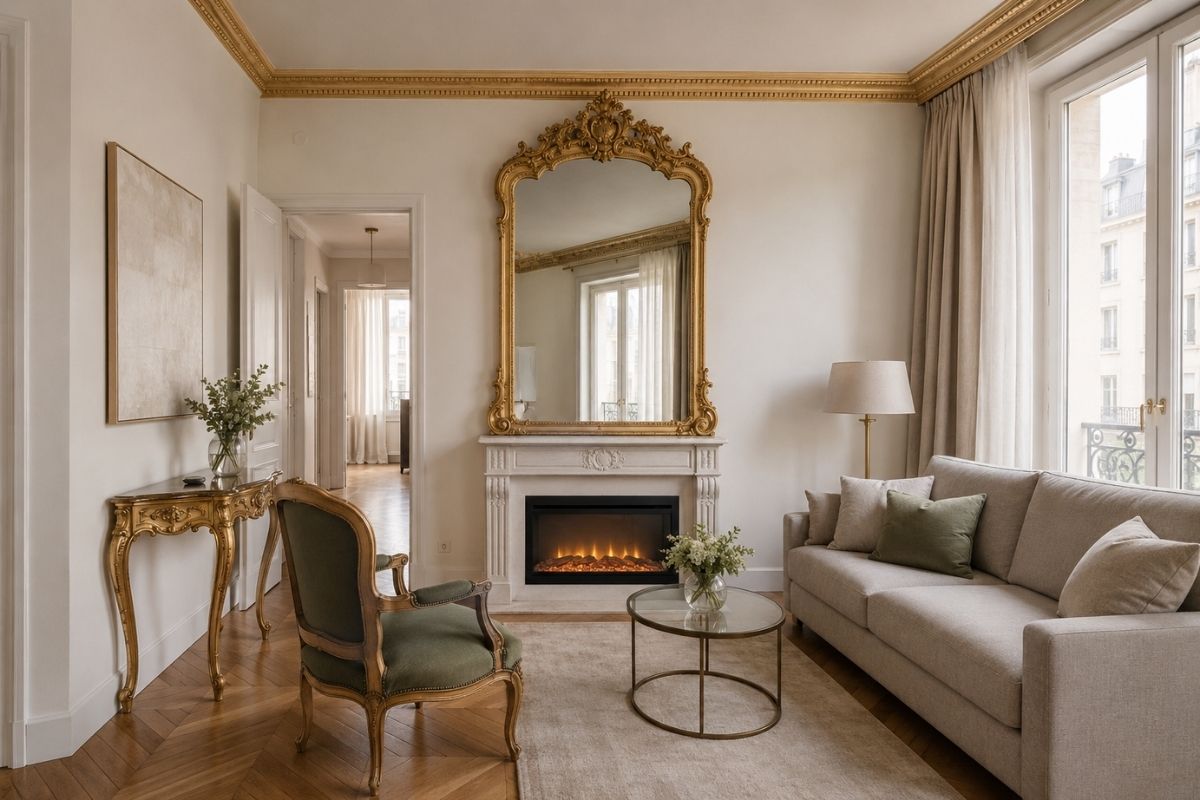
Rococo Was Designed for Small Rooms
A key insight about applying Rococo to apartments and small spaces: Rococo was not designed for grand halls. It was designed specifically as an alternative to grand halls.
The historical context is important. Baroque design — with its massive scale, theatrical spatial sequences, and imposing grandeur — served the ceremonial function of grand palaces. Rococo developed in reaction to Baroque specifically because French aristocratic life in the 18th century moved from large ceremonial apartments to small private rooms: the cabinet (private study), the boudoir (personal retreat), the salon (intimate drawing room).
These original Rococo rooms were typically 12–16 feet square — smaller than the living rooms of many modern apartments. The Rococo decorative vocabulary was specifically developed to work at this intimate scale: lightweight furniture with slender legs, pale palettes that maximized light, large mirrors that expanded apparent space, and ornament scaled to be visible and legible in small rooms.
This means Rococo is not a style you need to scale down for small spaces — it is already a style designed for small spaces.
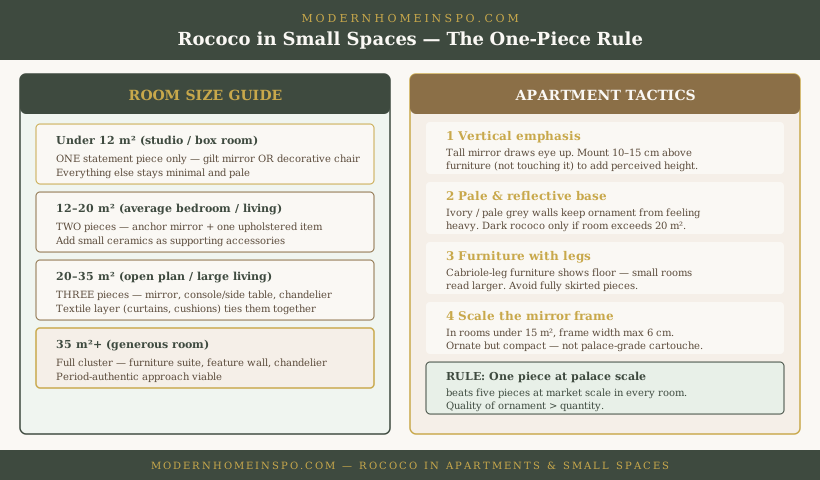
The One-Piece-Per-Room Rule
The primary adaptation for a small apartment versus a large house is not the style — it is the quantity of statement pieces per room.
In a large living room, two Rococo references (a curved sofa + an ornate mirror) can coexist without visual competition. In a small living room (under 12×14 feet), one strong Rococo reference is more effective than two competing ones.
The one-piece-per-room approach:
- Entry hall: ornate mirror above console (the only statement)
- Living room: ornate mirror above fireplace or console (single Rococo focal point)
- Bedroom: curved headboard OR ornate mirror above dresser (not both)
- Bathroom: ornate mirror above vanity (the single Rococo statement)
The surrounding room remains clean, neutral, and relatively simple. The single Rococo piece reads as a deliberate design decision; multiple ornate pieces in a small room read as accumulation.
Key Point
In a small space, one strong Rococo statement surrounded by simplicity is always more effective than multiple Rococo elements competing with each other. The contrast between the ornate piece and the clean surrounding room is what makes the piece legible.
Entry Hall
The apartment entry hall is often the first and best opportunity for Rococo character. A small console table with an ornate mirror above it is the most direct, most coherent, and most spatially appropriate Rococo reference available.
The formula for a small entry:
- A slim console table (under 14 inches deep) against the wall — dark or pale, but ideally in a finish that complements the wall color
- An ornate framed mirror above it, sized to fill most of the wall between the console and ceiling
- One or two objects on the console (a small ceramic vase, a tray)
- Nothing else on that wall
The large ornate mirror in a small entry hall creates the maximum space-expanding effect — it reflects the entry and any window light, making the hall appear at least twice as deep as it actually is.
Wall-mounted console: In a very small entry where even a slim console takes too much floor space, a wall-mounted console shelf (mounted directly to the wall with no legs) provides the same surface with zero floor footprint.
Small Living Room
In a small apartment living room, the Rococo focal point is typically the fireplace or a dedicated wall — not the main sofa.
Option 1 (with fireplace): A large ornate mirror above the fireplace is the complete Rococo statement for the room. Keep the sofa simple (curved arms if possible, but not necessarily ornate), the walls pale, and the other surfaces clean.
Option 2 (without fireplace): A console table with ornate mirror on one wall creates the same composition. Position this on the wall across from the main seating so the mirror is visible from the sofa.
Sofa choice in a small living room: If the room is small, a curved sofa may use more floor space than a straight-backed sofa at the same width. In very small rooms, choose the sofa for its scale and silhouette rather than for Rococo character — a modest straight-backed sofa with tapered legs is more appropriate than an oversized curved sectional. The ornate mirror provides the Rococo character; the sofa provides the seating.
What not to do in a small living room: A bergère accent chair in addition to a curved sofa and an ornate mirror — three Rococo references — in a small living room creates a crowded effect. Choose two at most.
Small Bedroom
In a small bedroom, the most effective single Rococo element is the headboard.
A curved or tufted headboard against pale walls — without any other Rococo reference — establishes the bedroom’s character immediately. The headboard creates the visual focal point that the bed requires in any bedroom; choosing a curved or tufted form shifts that focal point into the Rococo aesthetic with no additional cost to floor space.
If space allows a second element: An ornate mirror above the dresser (or leaning against a wall opposite the bed where it creates visual depth) adds the second Rococo reference.
Bedside tables: In a very small bedroom, wall-mounted shelf lights (no table required) and narrow bedside shelves (not tables) preserve floor space. Keep bedside objects minimal — a lamp (if table-mounted), a glass of water, a book.
Color: Pale warm walls are especially important in small bedrooms — they maximize apparent space and create the light, airy atmosphere that the Rococo palette provides. Off-white or warm cream is the most effective choice.
See small bedroom ideas for space-maximizing strategies that combine with Rococo aesthetics.
Bathroom
The bathroom is the most underused room for Rococo character — and the room where a single Rococo element creates the greatest proportional impact.
An ornate mirror above a standard bathroom vanity transforms the room’s character more dramatically than any other single change. Most bathrooms use plain rectangular mirrors; one carved or gilded ornate mirror frame reads as immediately considered and unexpected.
Additional small bathroom Rococo references:
- Muted brass or antique gold fixtures (taps, towel rail, toilet roll holder) — the bathroom equivalent of ormolu detailing
- A pale ceramic soap dish or small vase on the vanity
- Pale wall color (warm cream, pale sage, off-white) rather than the typical stark white
What to avoid in a small bathroom: Heavy velvet drapes or curtains at a shower or window — they absorb moisture and are impractical in a small humid space. Use lightweight linen or cotton panels if window coverage is needed.
Color and Light in Small Spaces
The Rococo pale palette is intrinsically suited to small spaces because it maximizes light reflection and apparent space.
Wall color: Off-white, warm cream, or pale sage. In a very small space, painting the ceiling the same color as the walls (or slightly lighter) removes the visual cap and makes the room feel taller.
Natural light: Pale Rococo colors perform best in natural light — they reflect and amplify daylight better than darker colors. If the apartment has limited natural light, choose a warmer tone of cream (slightly more yellow) that prevents the walls from reading cold under artificial light.
Mirrors as light multipliers: One or two large mirrors positioned to reflect window light dramatically increases the apparent brightness of a small apartment. This is the original Rococo function of mirrors — maximizing limited light — and it works equally well in a modern apartment with limited windows.
Artificial light: 2700K warm white throughout. In a small apartment where rooms flow into each other, consistent 2700K across the whole apartment creates visual continuity that makes the space feel larger and more coherent.
What to Avoid
Multiple ornate pieces in any one small room. The scale of ornamentation must match the scale of the room. One ornate mirror in a small entry hall reads as deliberate; three ornate mirrors and an ornate console and an ornate light fixture reads as cluttered.
Heavy textiles that block light. Thick velvet curtains, heavy patterned wallpaper, and dark-colored soft furnishings are appropriate in large Rococo rooms where they create richness. In a small apartment, they block light and make the space feel smaller. Use lighter versions: sheer linen curtains rather than velvet, pale textured wallpaper as an accent (one wall only) rather than full-room application.
Period reproduction furniture at the wrong scale. A full-scale period reproduction French commode (wide, low, with elaborate marquetry) in a small apartment bedroom typically takes up too much floor space for the room to function comfortably. Scale reproduction Rococo furniture to the room — smaller accent pieces (a guéridon side table, a bergère chair) fit more naturally than the largest case pieces.
Overloading the palette with Rococo specific tones. Attempting the full historical Rococo pastel palette (pale pink + pale blue + pale gold + cream all together) without the architectural elements that make it work produces a room that reads as a themed pastry shop rather than a designed apartment. Use one or two pale tones from the Rococo palette range; let the ornate mirror and textiles carry the character.
Renter-Friendly Rococo Solutions
Renters face specific constraints: no drilling into tile or load-bearing walls, no permanent changes to surfaces, and limited ability to install heavy architectural elements. The following Rococo-inspired approaches work without modifying the apartment.
No-Drill Mirror Hanging
Heavy ornate mirrors typically require wall studs or toggle bolts. For renters:
Adhesive hanging strips (Command strips or equivalents): Rated for mirrors up to approximately 16 pounds (7kg). Check the manufacturer’s weight rating before using — most ornate framed mirrors with glass exceed 16 pounds at large sizes. Suitable for smaller ornate mirrors (under 24 inches) in bedrooms and bathrooms.
Leaning mirrors: A large ornate-framed mirror leaned against the wall requires no drilling, can be moved freely, and actually reads as a deliberate contemporary staging choice rather than as a compromise. Minimum effective size for a leaning mirror: 60 inches tall. Lean against the focal wall of the bedroom, or beside a dresser.
Over-door hooks: For lightweight framed objects and smaller ornate mirrors, an over-door double hook (rated for the mirror weight) requires no drilling and leaves no damage.
Peel-and-Stick Panel Moulding
Authentic boiserie wall panels require installation, but peel-and-stick panel moulding (available from DIY retailers as flexible foam moulding strips with adhesive backing) creates the visual effect of framed wall panels at low cost and with no permanent damage.
How it works: Apply rectangular peel-and-stick moulding strips to a painted wall, creating the outline of boiserie-style panels. Paint the interior of the panels the same color as the wall, or a slightly different tone (off-white panels on warm cream walls, for example). The resulting wall reads as paneled without any structural work. Remove by pulling the adhesive strips off — typical renter-friendly damage: small patches of paint at the adhesive points, easily patched.
Where to use it: One wall in the bedroom (behind the headboard), or the focal wall in the entry hall. Full-room application is more complex but achievable.
Temporary Wall Color
Peel-and-stick wallpaper allows a renter to apply the Rococo pale palette — textured off-white, subtle damask patterns, pale sage — without painting. Modern peel-and-stick wallpaper from reputable brands removes cleanly from smooth walls. Test a small section before full application.
Best use for Rococo: One accent wall in a pale textured finish, or a subtle tonal pattern (not a bold print). The goal is the character of a Rococo interior surface, not a theatrical wallpaper statement.
Weight Limits for Adhesive Solutions
| Solution | Weight limit | Suitable for |
|---|---|---|
| Command Picture Strips (large) | 16 lb / 7kg | Small ornate mirrors under 24” |
| Command Heavyweight Strips | 28 lb / 13kg | Mid-size mirrors under 30” |
| Adhesive rail systems | Varies by product | Framed art, lightweight mirrors |
| Leaning against wall | No limit | Any size mirror |
For mirrors over 30 inches at any dimension, leaning is the safest no-drill option for renters. Adhesive hooks rated for the total weight (frame + glass) are the alternative for wall-hung placement.
Note
Before using any adhesive mounting solution, verify the wall surface is clean, dry, and painted with a latex/emulsion paint (not an oil-based paint or lime-wash — adhesive strips do not bond reliably to these surfaces). Allow new paint to cure for at least 7 days before applying adhesive hardware.
Frequently Asked Questions
- Can Rococo design work in a small apartment?
- Yes — Rococo was originally designed for small, private rooms. The French aristocratic boudoir and cabinet (the rooms where Rococo design was most fully expressed) were typically smaller than most modern apartments. In a small apartment, Rococo character works through one ornate statement piece per room — a mirror, a curved chair, an ornate frame — rather than through the full boiserie wall systems of historical palaces.
- What Rococo elements work best in small rooms?
- Ornate mirrors (expand apparent space by reflecting it), pale wall colors (maximize light and space), muted brass accents (add warmth without bulk), and one curved furniture piece (establishes Rococo character without overwhelming the room). Avoid multiple large ornate pieces, heavy velvet curtains that block light, and busy patterned wallpaper.
- Will Rococo make a small room feel smaller?
- Correctly applied, no. A large ornate mirror on a wall of a small room makes the room appear larger (by reflecting depth and light). Pale Rococo wall colors maximize light reflection and apparent space. The risk is overcrowding with multiple ornate pieces — which would make any style feel claustrophobic in a small room.