Rococo Bedroom Ideas: Design Principles and Practical Applications
Quick Answer
A Rococo bedroom uses a curved upholstered headboard, an ornate gilded mirror above the dresser or vanity, pale warm wall color (off-white, warm cream, or pale sage), muted brass hardware, and layered soft furnishings in cream, ivory, and soft gold. One or two Rococo-referenced pieces in a calm neutral room is the practical modern formula.

Rococo Bedroom Principles
The Rococo boudoir was the most intimate room in a French aristocratic interior — a small private retreat designed for comfort and visual pleasure at human scale. For Rococo’s full historical context, see Rococo Interior Design: A Complete Guide.
This article covers the practical design decisions: headboard types and dimensions, furniture choices, rug sizing, lighting specs, and how to handle small bedrooms. For the step-by-step build sequence and budget sourcing guide, see Rococo Aesthetic Bedroom.
The governing principles for a Rococo bedroom in a modern home:
Curve over straight. Every choice between a curved element and a straight-edged equivalent should favor the curve. Curved headboard over a flat panel. Tapered or cabriole legs over straight block legs. A round or oval mirror over a rectangular mirror. These cumulative choices shift the room’s character without requiring any single dramatic statement.
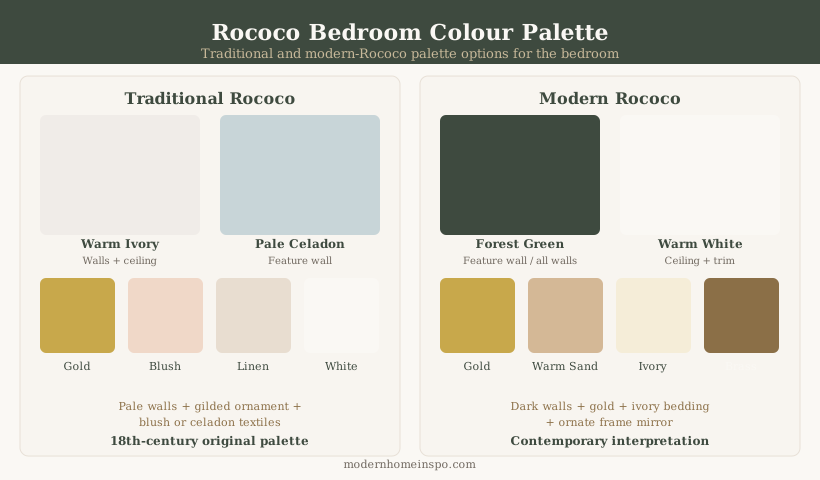
Pale and warm. The Rococo palette — off-white, warm cream, pale sage, pale gold — is close to a warm neutral palette and translates easily to modern bedrooms. The pale palette maximizes the apparent size of a bedroom and creates a calm, restorative atmosphere.
Ornament at focal points only. In a modern bedroom, Rococo ornament works best concentrated at one or two focal points: above the bed (the headboard and any art or mirror above it) and above the dresser (an ornate mirror). Distributing ornament across many objects and surfaces creates clutter rather than character.
Gilded accents, not gilded everything. Muted brass or burnished gold in hardware, lamp bases, and mirror frames introduces the Rococo gilded quality without the museum-level saturation that makes a room feel theatrical. A little gilded warmth goes a long way in a bedroom.
Palette and Walls
The wall color is the largest surface in a bedroom and sets the character of everything else.
Best Rococo bedroom wall colors:
Off-white or warm white — The closest to historical Rococo plasterwork. Works best in bedrooms with good natural light. Pair with cream bedding rather than bright white, to prevent the room from reading as clinical.
Warm cream — Slightly more color presence than off-white. Reads warm and soft under 2700K lighting. The most universally flattering bedroom wall color.
Pale sage green — References the sage boiserie panels used in French Rococo cabinets and boudoirs. Works particularly well with gilded mirror frames and warm wood. Adds more color character than cream but remains firmly in the neutral-adjacent zone.
Pale dusty blush — Historically appropriate for a Rococo boudoir palette but harder to execute in a modern bedroom. Works best in rooms with good natural light and when the other elements (bedding, furniture) are close to neutral. Avoid pairing with multiple other accent colors.
Warm greige — Not historically specific to Rococo, but the most practical neutral foundation if the Rococo references are subtle (just an ornate mirror and curved headboard). Warm greige walls allow Rococo accent pieces to read as considered additions rather than stylistic impositions.
Design Tip
Test pale wall colors in the actual room at different times of day before committing. A pale sage that looks perfect in natural light may read as yellow-green under warm artificial light. A warm cream that looks ideal in the morning may appear orange in the evening. Test a 12-inch square sample for at least 24 hours before painting.
The Bed and Headboard
The bed is the dominant piece in any bedroom. Its form sets the design direction more than any other element.
Upholstered Curved Headboard
A tall, curved, upholstered headboard is the single most effective Rococo introduction to a modern bedroom. It references the upholstered canapé and bergère forms of Rococo seat furniture without requiring reproduction period pieces.
What to look for:
- A curved top profile — arched, or with a rounded central peak
- Upholstered in velvet, linen, or a textured fabric in off-white, cream, pale blush, or soft gold
- Tufted detail (diamond or button tufting adds Rococo character)
- The headboard should be proportionally tall — a headboard that extends two-thirds of the wall height behind the bed creates a more dramatic, Rococo-appropriate focal point than a low headboard
Headboard colors:
- Off-white or warm cream: the most versatile; works with any pale wall color
- Pale velvet in dusty blush or soft gold: more specific Rococo character
- Pale sage or soft gray-green: works particularly well with gold accents and warm neutral walls
Four-Poster Beds
A four-poster bed with carved or turned posts references the historic Rococo lit à baldaquin. In a contemporary bedroom, this works best when:
- The posts are relatively slender (not heavy Gothic or Tudor proportions)
- The finish is painted white, pale gray, or gilded — not dark wood
- The canopy, if used, is in sheer linen or lightweight fabric rather than heavy velvet or brocade
A four-poster bed requires a room with adequate ceiling height (at least 9 feet for a properly proportioned bed) and sufficient floor area to prevent the posts from dominating the space.
What to Avoid
Platform beds with straight-edged headboards: These belong to minimalist or midcentury aesthetics and will fight against any Rococo element elsewhere in the room.
Fully upholstered beds with no visible frame: While comfortable, beds with no visible leg or frame structure lose the carved wood element that is characteristic of Rococo furniture.
Matching bedroom sets: Purchasing a matching headboard, side tables, and dresser in the same finish tends to produce a furniture-store aesthetic rather than a curated room. Mix elements — a tufted headboard with different side tables, a carved mirror above a plain dresser.
Mirrors and Dresser
The dresser and mirror combination is the secondary focal point of a bedroom, typically opposite or adjacent to the bed.
The Ornate Dresser Mirror
An ornate framed mirror above a dresser — in a gilded or carved wood frame with flowing or asymmetrical ornament — is one of the most direct and practical Rococo references available.
Scale: The mirror should be wide enough to be useful for dressing (at minimum, face-width; ideally shoulder-width). For a Rococo composition, a larger mirror that fills most of the wall above the dresser is more effective than a small ornate mirror on a large empty wall.
Frame character: Look for frames with carved or moulded ornament that is more complex than a plain rectangular molding. Asymmetrical carved detail (flowing scroll or shell forms) is most authentically Rococo. Symmetrical ornate frames (matching carved corners with central ornament) are easier to find commercially and also effective.
Frame finish: Burnished or antiqued gold reads as sophisticated Rococo. High-gloss gold reads as brash. Pale painted white or cream frame with gold highlights is appropriate for a softer Rococo bedroom. Avoid mirror frames in silver or chrome in a warm Rococo room.
Freestanding Mirrors
A large freestanding or leaning mirror with an ornate frame is an alternative to the wall-hung dresser mirror. In a bedroom, a full-length ornate mirror leaned against a wall creates a Rococo focal point without requiring wall hardware — useful in rentals.
Floor mirrors: A large ornate-framed floor mirror reflects the entire room, multiplying light and apparent space — exactly as the large mirrors did in historical Rococo boudoirs.
Supporting Furniture
Bedside Tables
Bedside tables are the most visible supporting furniture in a bedroom. For a Rococo bedroom:
Round or oval top: A round or oval top references the Rococo guéridon side table form and contrasts pleasantly with the rectangular envelope of the bed.
Curved or tapered legs: Cabriole or tapered legs in a metal or natural wood finish fit the Rococo proportion better than straight block legs or cube side tables.
Mixed materials: A marble-top table with metal legs, or a ceramic-base table, adds material interest without requiring carved wood reproduction pieces.
Avoid: Matching cube side tables in the same material as the headboard — these read as a bought-as-a-set look rather than a curated room.
Dresser
The dresser for a Rococo bedroom works best with a curved or serpentine front — referencing the Rococo commode form — or with decorative hardware (drop pulls or ring pulls in muted brass) that introduces Rococo detail on an otherwise simple piece.
Painted dressers in off-white, pale sage, or warm gray with gilded or muted brass hardware are more consistent with the Rococo palette than dark wood dressers.
Accent Chair
A bergère-style or small curved armchair in a corner of the bedroom — in velvet, textured linen, or boucle in a pale muted tone — adds Rococo seat furniture character and creates a reading or dressing area. This is particularly appropriate in bedrooms that are large enough to accommodate a seating area.
Textiles and Bedding
Textiles are the most flexible element of a bedroom — they can be changed without structural commitment, and they carry significant visual and tactile character.
Bedding
The Rococo bedding palette: Cream, ivory, warm white, soft gold, pale blush in a muted tone. Avoid bright white (too clinical) and cool blue-gray (fights the warm Rococo palette).
Duvet cover: A plain linen or cotton duvet in warm cream or natural ivory is the most versatile foundation. It can be layered with other textiles and allows Rococo accents (embroidered cushions, a velvet throw) to stand out.
Layering: Rococo textile richness came from layering multiple materials — the bed in a historical Rococo boudoir was piled with cushions, coverlets, and drapery. In a modern bedroom, layering is more restrained: a duvet cover + a folded throw across the foot of the bed + two or three accent cushions against the standard sleeping pillows.
Accent cushions: Two or three cushions in complementary textures and tones — a velvet cushion in soft gold, an embroidered cushion with a floral or organic motif, a plain silk or satin cushion in ivory — add Rococo textile richness without requiring a full set.
Window Treatments
Sheer curtains in linen or silk: Pale sheer curtains soften natural light and add fabric texture to the room without blocking light. Sheer white or natural linen panels are the most practical and widely available option.
Heavier drapes over sheers: A pair of heavier drapes — in a pale velvet, linen, or damask — at the sides of the window, with sheers behind, creates a layered window treatment that references the Rococo layered textile approach. The drapes should be in a tone that works with the wall color: slightly darker or with a color accent (pale sage against warm cream walls, for example).
Hardware: Curtain rods and finials in muted brass or antique gold fit the Rococo palette. Avoid chrome or brushed nickel in a warm Rococo bedroom.
Rug
A rug in the Rococo bedroom should add texture and warmth without competing with the other soft furnishings for attention.
Best options:
- A pale wool or natural fiber rug in cream, warm ivory, or a subtle geometric pattern using two values of the same neutral tone
- A low-pile rug with a muted floral or organic motif in the Rococo palette colors (cream, sage, gold)
Size: The rug should extend at least 18 inches beyond the sides and foot of the bed. A rug that only sits under the bed frame reads as inadequate. For queen or king beds, a 9x12 or 8x10 rug is typically appropriate.
Lighting
Rococo interiors were designed around candlelight — which is approximately 1800–2200K in color temperature. Modern lighting for a Rococo bedroom should approximate this with 2700K warm white bulbs throughout.
Bedside Lamps
A pair of matching or complementary table lamps on the bedside tables provides the task lighting needed for reading and creates a symmetric anchoring of the bed composition.
Base character: A ceramic or metallic lamp base with surface texture or color — rather than a plain column form — fits the Rococo decorative vocabulary. A glazed ceramic base in off-white or pale sage, or a muted brass metallic base, are appropriate choices.
Shade: A linen or fabric drum shade in cream or white, large enough to be in proportion with the base. The shade bottom should be at approximately seated eye level when sitting up in bed.
Ceiling Fixture
A small chandelier — even a modest one — is the most appropriate ceiling fixture for a Rococo bedroom. It distributes light at multiple points rather than from a single source and creates the multi-point light quality associated with candelabra.
Scale for a bedroom: A smaller chandelier than for a living room — typically 16–24 inches in diameter for a standard bedroom. The bottom of the fixture should clear 7 feet from the floor.
Alternative: A semi-flush fixture with multiple bulbs and a decorative form — not a plain flat disc — provides similar light quality without the hanging length that a chandelier requires.
Rococo in Small Bedrooms
The original Rococo boudoir was a small room — typically 12x15 feet or smaller. The style is not dependent on large spaces.
In a small bedroom, the practical approach is to concentrate Rococo character on the most important focal point (the bed and the wall behind it) and keep the rest of the room simple.
Priority elements for a small Rococo bedroom:
- A curved or tufted headboard — establishes the design direction without taking floor space
- Pale wall color — makes the room feel larger while establishing the Rococo palette
- One ornate mirror — above the dresser or leaning against a wall
- Muted brass hardware — on furniture, door handles, and lighting fixtures
What to leave out in a small room:
- An accent chair (takes floor space)
- Multiple ornate pieces
- Heavy drapes (use lighter sheers to preserve the sense of space)
The small bedroom can achieve complete Rococo character with just the headboard, pale walls, and an ornate mirror — three elements, no floor space beyond standard furniture.
See the Rococo architecture in small spaces guide for more detail on adapting Rococo to limited floor areas.
Frequently Asked Questions
- What makes a bedroom look Rococo?
- A Rococo bedroom is characterized by curved forms (a tufted or curved headboard, curved furniture lines), an ornate framed mirror, pale warm wall colors (off-white, cream, pale sage), gilded or muted brass accents, and layered soft furnishings in cream, ivory, or soft gold. The effect is elegant and feminine without being theatrical.
- What color should I paint a Rococo bedroom?
- Pale warm neutrals work best: off-white, warm cream, or pale sage green. These reference the historical Rococo boiserie palette while remaining livable in a modern bedroom. Pale dusty pink or pale blue are also historically appropriate in small doses but require careful execution to avoid looking like a child's room.
- What type of bed is best for a Rococo bedroom?
- A curved, upholstered headboard in off-white, cream, or pale velvet is the most effective Rococo bedroom focal point. Tufted upholstery adds Rococo character. A four-poster bed with carved details references historic Rococo bed forms, though these are harder to execute without theatrical staging. Avoid platform beds with straight-edged, unupholstered headboards — they belong to minimalist or midcentury aesthetics.
- Can a Rococo bedroom work in a small room?
- Yes — the original Rococo boudoir was a small private room. In a small bedroom, focus on two or three Rococo elements: an ornate mirror, a curved headboard, and appropriate pale wall color. Avoid multiple large ornate pieces that would overwhelm the scale. One statement piece per visual zone.