Affordable Luxury Bedroom on a Budget: What to Prioritize
Quick Answer
The highest-impact affordable luxury bedroom investments are: a quality linen or cotton duvet cover (feels expensive immediately), warm 2700K bedside lamps (transforms the evening atmosphere), one ornate mirror (adds character for $80–$150 / £65–£120), and fresh paint in the right neutral (the foundation everything else rests on). Furniture can be simple if the textiles and lighting are right.
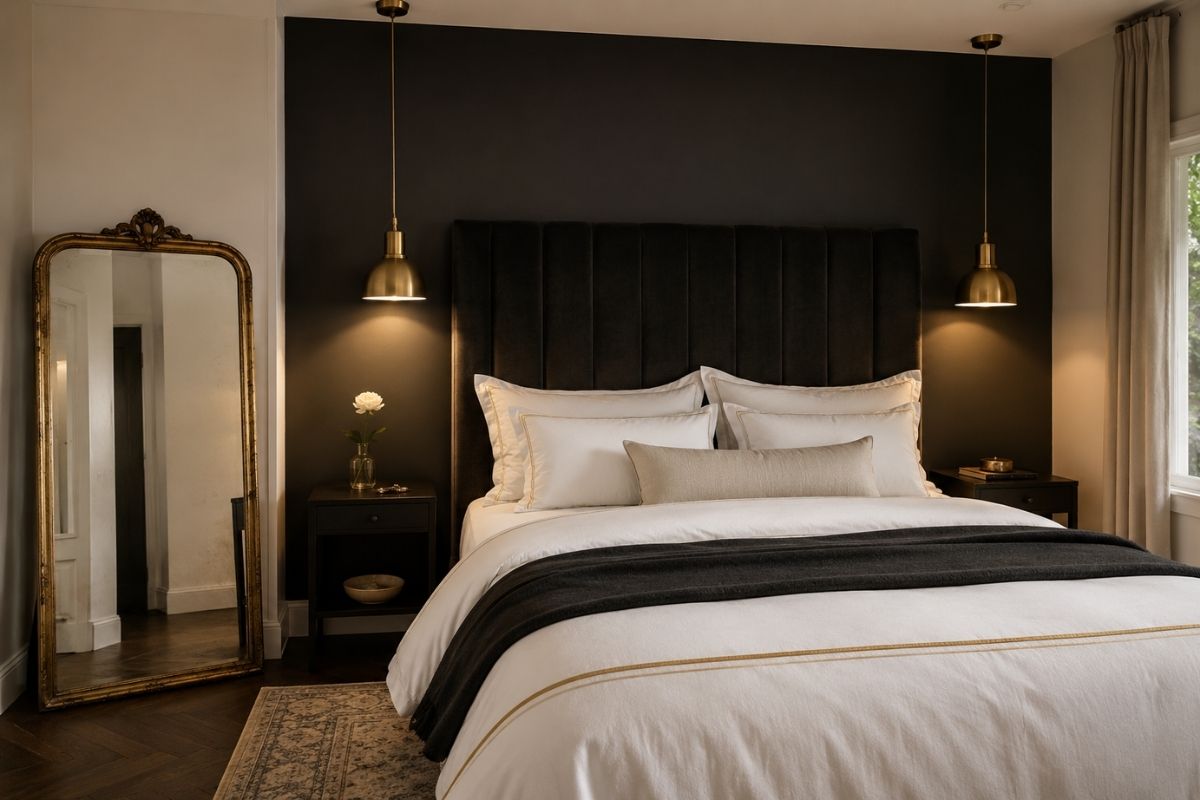
What Makes a Bedroom Feel Luxurious?
Luxury in a bedroom is not primarily about the cost of individual items. It is about the cumulative sensory experience of the room: how it looks in the evening, how the bedding feels, how calm the space is, and whether the room has a sense of having been deliberately composed.
The specific elements that create this sense:
Soft, warm light. Almost every luxury hotel room uses warm, indirect, low-intensity bedside lighting rather than overhead fixtures. The visual effect is warmth, intimacy, and visual softness — qualities that make the room feel like a retreat. This costs almost nothing beyond a lamp and a warm-temperature bulb.
High-quality textiles. The bedding is the largest surface in the bedroom and the most tactile. A linen or quality cotton duvet cover that drapes softly, layers properly, and feels pleasant to touch immediately upgrades the perceived quality of the room — more than any piece of furniture.
Clean surfaces. A bedroom where every surface is clear of clutter reads as luxurious even if the furniture is inexpensive. Clutter is the enemy of perceived luxury. Storage (whether built-in or containers under the bed) that allows all surfaces to be clear is more valuable than decorative objects that compete with one another.
A focused palette. A luxury bedroom has a consistent palette — all textiles, walls, and visible surfaces in a coordinated range of tones. A room where the duvet is cream, the cushions are blue, the curtains are gray, and the walls are beige reads as accumulated rather than designed. A room where everything is in a cohesive pale neutral palette reads as considered.
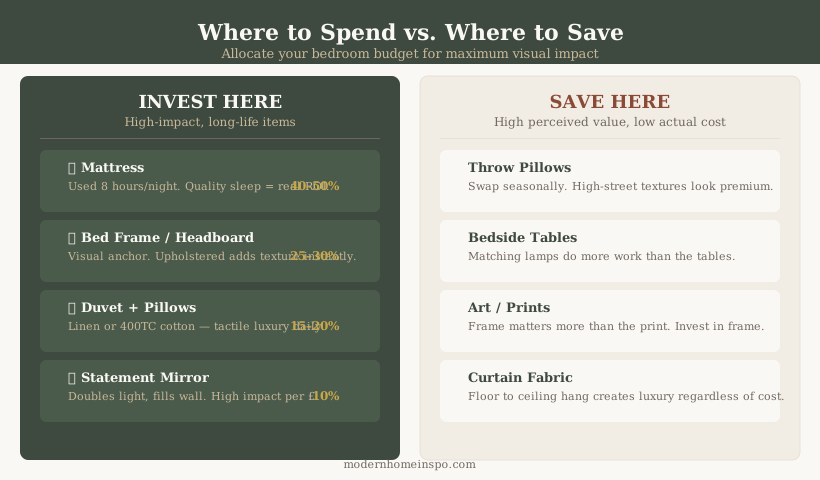
Highest-Impact Investments
The following investments, in order of visual impact per dollar:
1. Bedding
A quality duvet cover and pillowcases in linen or 400+ thread count cotton percale. The soft drape of quality linen — the way it creases and layers naturally — is immediately visible and cannot be imitated by cheap alternatives. Budget: $80–$200 / £65–£160 for a quality duvet cover and two pillowcases.
2. Bedside Lamps
Two matching bedside lamps at the correct height with 2700K warm bulbs. This single change transforms the evening atmosphere of any bedroom. Budget: $40–$80 / £32–£65 per lamp at mainstream retailers; the bulbs add $10–$20 / £8–£16 total.
3. Wall Paint
A high-quality paint in the correct warm neutral. The wall is the largest surface in the room; a well-chosen, well-executed paint color makes everything else look better. The cost difference between a premium paint and a budget paint is typically $20–$40 / £16–£32 per can — worth paying. Budget: $50–$80 / £40–£65 for a bedroom-sized room.
4. An Ornate Mirror
One ornate mirror — above the dresser, leaning against a wall, or on a dedicated wall — adds character and design intention to the room. Ornate mirrors are available at significant discounts at homeware discount retailers, estate sales, and antiques fairs. Budget: $80–$200 / £65–£160 for an effective ornate mirror.
5. A Throw
A cashmere-blend or quality wool throw draped over the foot of the bed adds the layered luxury look that no other single item achieves. Budget: $40–$120 / £32–£95 for a quality throw (discount homeware retailers often carry these at significant discounts from original retail prices).
Where to Save
The following are areas where spending more does not produce proportional visual improvement:
Bed frame: The visual character of the bed is dominated by the headboard and the bedding, not by the frame. A simple, sturdy bed frame in a neutral finish at $150–$300 / £120–£245 is indistinguishable from a $1,000 / £800 frame when covered with quality bedding.
Nightstands/bedside tables: Simple, inexpensive side tables are adequate if the lamp on top is quality and the surface is kept clear. The lamp is more visible than the table.
Curtain fabric: Sheer linen or cotton voile curtains at budget price points look as good as designer equivalents if the hem is the right length (floor-length) and the hanging is correct (proper curtain rings on a rod at the correct height).
Art: A single quality print in a simple but appropriate frame is more effective than multiple expensive pieces in mismatched frames. Frame selection matters more than print cost.
Rug: A jute or natural fiber rug at a mid-range price point functions as well as a designer equivalent if it is correctly sized. Size matters more than material quality at this price point.
Key Point
The ratio that creates affordable luxury: spend on things that are touched and experienced (bedding, lighting temperature), and save on things that are primarily visual background (bed frame, basic side tables, curtain fabric).
Bedding: The Most Important Textile
Materials
Linen: The most visually luxurious and the most forgiving in use. Linen duvet covers drape softly, develop a beautiful texture with washing, and never need ironing (the creased quality is part of the aesthetic). More expensive than cotton but the visual difference is immediately apparent.
Cotton percale (400+ thread count): Crisp, smooth, and cool to sleep in. Higher thread counts are smoother and more durable. A 400–600 thread count percale feels and looks quality; thread counts above 800 provide diminishing returns.
Cotton sateen: Softer and slightly shinier than percale. Less durable over time but very soft initially. Good for a bedroom that prioritizes visual smoothness over practical durability.
What to avoid: Very low thread count cotton (under 200) — feels rough and looks thin. Microfiber or polyester bedding — does not breathe well, does not drape naturally, and is visually flat.
Color
For a neutral luxury bedroom: natural linen, warm white, ivory, or soft cream. These tones drape naturally and photograph well. Avoid bright white (too harsh), cool gray (fights warm neutral walls), and print patterns (requires more skill to integrate and dates more quickly).
Layering
The luxury look comes from layering:
- Base: fitted sheet (same color family as the duvet)
- Duvet in a quality cover
- One or two decorative cushions in front of the sleeping pillows
- A throw folded at the foot of the bed or draped over one corner
The decorative cushions and throw create the hotel-room layered look that is the specific visual quality people associate with luxury.
The Mirror Trick
An ornate mirror — in a carved or decorated frame rather than a plain rectangular frame — is one of the most reliable shortcuts to perceived luxury in a bedroom. It creates the impression of a considered design decision, reflects light and space, and provides visual character that plain furniture cannot.
Budget sources for ornate mirrors:
- Discount homeware retailers (TK Maxx/TJ Maxx, HomeGoods, etc.)
- Antiques fairs and estate sales — where genuine vintage ornate mirrors appear at significant discounts from retail
- Online marketplaces (eBay, Facebook Marketplace, Vinted) for second-hand pieces
- End-of-season sales at homeware retailers
Placement: Above the dresser (typical and effective), leaning against the wall in a corner (contemporary and accessible), or on the wall opposite the window (maximizes light reflection).
What makes the mirror look expensive: Size (larger reads as more confident), frame quality (carved or detailed frames rather than thin pressed ornament), and finish (warm burnished gold rather than bright shiny gold).
Lighting on a Budget
The fastest, cheapest improvement available to most bedrooms is a lighting change:
- Replace all bulbs with 2700K warm white LED — this single change transforms how wall colors, textiles, and wood tones appear in the evening.
- Add two bedside lamps — even simple ceramic or metal-base lamps at $30–$50 / £25–£40 each provide the warm zone of light beside the bed that distinguishes a considered bedroom from an underdeveloped one.
- Plug the overhead light into a dimmer — or simply turn the overhead off in the evening and rely on the bedside lamps. The overhead light on full brightness is the primary cause of “hospital room” evening atmosphere.
Where to find inexpensive lamps that look quality:
- Simple ceramic base lamps in off-white, cream, or pale sage at mainstream homeware retailers
- Vintage ceramic base lamps at charity shops and second-hand markets — often significantly better quality than new budget alternatives
- Metal bedside lamps in a matte black or brass finish — clean, simple, and look intentional
Shade: A drum or empire shade in natural linen or cream cotton looks quality and distributes light well. Match shade size to base scale — too small a shade on a large base looks awkward.
Paint and Walls
The most important practical advice: Buy a quality paint, not the cheapest. Cheap paint requires more coats, covers less evenly, and does not hold up to cleaning. The difference in cost per room is typically $20–$40 / £16–£32. For the single largest surface in the bedroom, this is not where to economize.
Color selection:
- A warm greige or warm cream is the most reliable neutral for a luxury bedroom feel
- Test before committing — a 12-inch sample square on the actual wall, observed at multiple times of day
- Do not choose from paint chips under store fluorescent lighting
Finish: Eggshell or satin finish for bedroom walls — enough sheen to be wipeable, not so much as to show every imperfection. Flat/matte finish shows brush marks and is difficult to clean.
Technique: Two coats minimum, with proper surface preparation (cleaning, sanding any rough areas, priming new or repaired drywall). The quality of the application affects the perceived quality of the result as much as the paint itself.
Full Room Budget Breakdown
Total cost to transform an existing bedroom from underdeveloped to luxury-feeling, without furniture replacement:
| Item | Budget tier | Mid tier | Notes |
|---|---|---|---|
| Wall paint (one room) | $50 / £40 | $80 / £65 | Quality paint saves coats — worth the mid-tier spend |
| Duvet cover + 2 pillowcases | $80 / £65 | $150 / £120 | Linen at mid-tier; quality cotton percale at budget |
| Two bedside lamps | $60 / £50 | $120 / £95 | Budget ceramic or rattan bases from discount retailers |
| 2700K bulbs (pack) | $15 / £12 | $25 / £20 | Smart bulbs optional; standard LED sufficient |
| Throw | $35 / £28 | $90 / £72 | Wool blend at mid-tier; cotton or acrylic at budget |
| Ornate mirror | $80 / £65 | $180 / £145 | Estate sales and TK Maxx beat retail significantly |
| Curtains (floor-length) | $60 / £50 | $120 / £95 | Unlined linen panels at budget; lined at mid-tier |
| Hardware (pulls/knobs) | $20 / £16 | $50 / £40 | Matching set for dresser + wardrobe handles |
| Rug | $80 / £65 | $180 / £145 | Jute or natural fiber at budget; wool at mid-tier |
| Total | ~$480 / £390 | ~$995 / £812 |
The budget tier produces a transformed room. The mid-tier produces a room that would photograph well in any shelter magazine. Neither requires furniture replacement. The furniture becomes irrelevant once the textiles, lighting, and walls are right.
The single-item-at-a-time approach: If the full total is too much at once, the priority order is: bedside lamps and bulbs first (immediate atmosphere change, cheapest), then bedding, then paint, then mirror. Each step independently improves the room; they compound when combined.
Finishing Details
Small details create the impression of a deliberate design rather than an assembled room:
Matching hardware: Replacing mismatched drawer pulls and knobs with matching hardware in the same finish (muted brass or matte black) throughout the bedroom — dresser, wardrobe, any cabinets — creates visual continuity that reads as designed.
Curtain length: Floor-length curtains (hanging from ceiling height, touching the floor) are one of the most reliably luxury-looking choices in a bedroom. Budget curtain panels in linen or cotton hung at ceiling height look more considered than expensive shorter curtains.
Fresh flowers or a plant: A single plant in a simple pot, or fresh flowers in a ceramic vase, adds life and organic warmth to a neutral bedroom. The care required to maintain a live plant also signals a certain intentionality — the room is actively tended, not just furnished.
Clear and organized surfaces: Charging cables hidden or contained (a small box, a cable organizer), items off the floor, the top of the dresser clear except for intentional objects. No room looks luxurious with visual clutter.
Consistent object palette: On any surface where objects are displayed, keep the palette consistent — all in the same material family (all ceramic, all warm metal, all natural) or all in the same color range. A random collection of objects in different finishes and colors reads as accumulation; a composed grouping in a coherent material palette reads as design.
Frequently Asked Questions
- What makes a bedroom look expensive?
- High-quality linen or cotton bedding, layered textiles (duvet + throw + multiple cushions), warm soft lighting (bedside lamps at 2700K rather than overhead), a clean neutral wall color, and clear surfaces without clutter. These elements — not expensive furniture — produce the look of a luxury hotel room.
- How much should I spend on bedding?
- Bedding is worth spending on — it is the largest single visible surface in the bedroom and the most tactile element. A quality linen duvet cover and matching shams in the $80–$150 (£65–£120) range produces a noticeably more luxurious result than budget cotton alternatives. Thread count above 400 in cotton percale or cotton sateen also produces a good result.
- What is the cheapest way to make a bedroom look luxurious?
- Paint the walls a high-quality warm neutral, change all bulbs to 2700K warm white, add bedside lamps (inexpensive floor or table lamps from discount furniture stores work), and buy a linen or quality cotton duvet cover. These four changes — costing under $300 / £245 combined — produce more visual improvement than most furniture replacements.
- Do expensive frames and headboards make a bedroom look luxurious?
- An upholstered headboard makes a significant difference to the bedroom's visual character, but it does not need to be expensive. A headboard in the $100–$300 (£80–£245) range (available from mainstream furniture retailers) provides the same visual impact as a $1,000 (£800) designer equivalent if the profile and upholstery fabric are chosen well.