Best Outdoor Rugs to Add Comfort to Any Outdoor Space
Quick Answer
The best outdoor rugs for most situations: polypropylene flatweave for maximum durability and easy cleaning, recycled PET (plastic bottle) rugs for the same durability with slightly better sustainability credentials, or natural fiber (jute, sisal, seagrass) for covered patios and drier climates. Size the rug so all furniture legs sit on it, or all front legs at minimum.
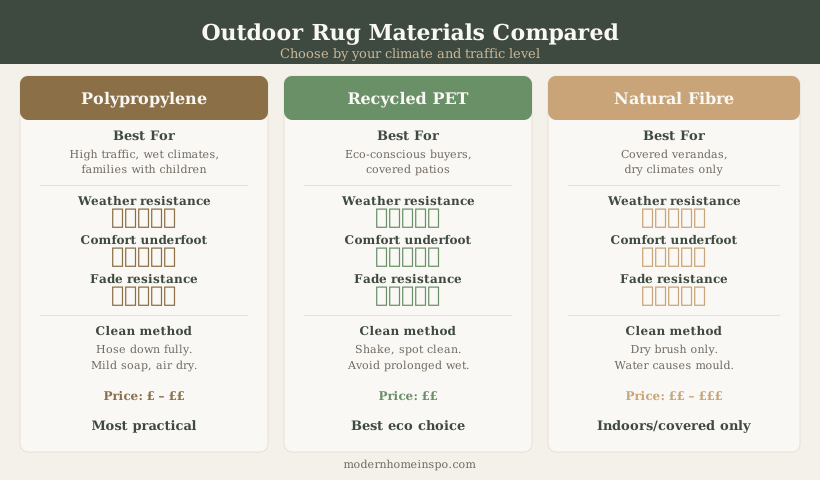
Material Comparison
Polypropylene (Olefin)
The most widely available and most durable outdoor rug material. Polypropylene is:
- UV-resistant: Resists fading from sun exposure better than most alternatives (specific UV rating varies by product)
- Waterproof: Does not absorb water; dries quickly after rain
- Mold and mildew resistant: Does not support mold growth if allowed to dry
- Easy to clean: Rinse with a hose; scrub if needed
- Inexpensive: The lowest cost-per-durability outdoor rug option
Limitations: Polypropylene is a plastic product and does not biodegrade. Low-cost polypropylene rugs can feel synthetic underfoot. Very hot direct sun can cause some warping in low-quality products.
Recycled PET (Plastic Bottle Rugs)
Similar performance to polypropylene but made from recycled plastic bottles rather than virgin plastic. Same durability, UV resistance, and cleanability as polypropylene with marginally better environmental credentials (recycled material, though still not biodegradable).
Often woven into flatweave or kilim-style patterns that look more refined than some polypropylene alternatives.
Natural Fiber (Jute, Sisal, Seagrass)
Natural fiber rugs have an attractive appearance that synthetic materials struggle to replicate — the texture and tone of jute or sisal is genuinely organic in quality.
Limitations for outdoor use: Natural fibers absorb water, swell when wet, and are susceptible to mold and mildew if not allowed to dry thoroughly. In consistently wet climates or fully exposed positions, natural fiber rugs deteriorate within one season.
Where they work outdoors: Covered patios with minimal rain exposure, under roof overhangs, on covered porches. Dry climates where rain is infrequent and the rug dries quickly between rain events.
Where they do not work: Fully exposed patios in wet climates, balconies exposed to driving rain, decks without cover.
Woven Cotton
Washable cotton flat-weave rugs can be used outdoors in warm, dry conditions. They are not water-resistant, will deteriorate quickly in sustained wet conditions, and require frequent washing in climates with regular rain.
Best used on covered outdoor areas or brought inside when rain is expected.
Sizing
Patio dining area: The rug should be large enough for all dining chair legs to remain on the rug when chairs are pulled out for seated use. For a standard 4-seat round table (90cm diameter), a 200cm × 200cm rug is typical. For a 6-seat rectangular table (180cm × 90cm), a 270cm × 200cm rug. Undersized dining rugs — where chair legs fall off the rug when pulled out — create instability and look inadequate.
Patio lounge area: Same principle as indoor rug sizing — all sofa front legs at minimum on the rug, ideally all seating legs. For a typical outdoor sofa and two chairs arrangement, a 200cm × 300cm rug is a common starting point.
Balcony: A 120cm × 180cm rug fits under two bistro chairs and a small table. A 150cm × 240cm accommodates more seating or a slightly larger balcony. Leave a clear border around the rug — at least 15–20cm — between the rug edge and the railing or wall, to prevent the space from feeling cramped.
Key Point
Use painter’s tape on the patio or balcony floor to mark the rug dimensions before buying. For outdoor spaces, it is much harder to return a rug that is the wrong size than for indoor spaces — outdoor rugs are often not returnable once used.
Pattern and Color
Natural and neutral tones: Cream, warm gray, sand, off-white, natural sisal color — these integrate with most outdoor furniture and plant colors and resist dated appearance. Neutral outdoor rugs photograph well and provide a visual foundation that does not compete with furniture and plantings.
Stripe patterns: A simple two-color stripe — cream and natural, warm gray and off-white — is the most universally successful outdoor rug pattern. It adds visual interest without committing to a specific color scheme.
Geometric patterns: Flatweave geometric patterns (kilim-inspired) in neutral tones add more visual character than plain rugs. Work well in more deliberately styled outdoor spaces.
Bright colors: Bright primary or secondary colors fade faster than neutral tones and become dated more quickly. If color is wanted, use a muted version — dusty terracotta, sage, warm rust — rather than high-saturation primaries.
What to avoid: High-contrast bold graphic patterns that look fine in retailer photography but visually dominate a small outdoor space. The rug should anchor the space, not be the primary visual statement.
Durability Factors
UV rating: Many outdoor rugs specify a UV fade-resistance rating (often measured in hours of UV exposure before significant fading — look for 1,000+ hours for exposed applications). Check this specification for rugs in full sun positions.
Construction density: Denser weaves (more fibers per square inch) resist compaction and wear better than loose weaves. A rug that feels solid and substantial when pressed will hold up better than a thin rug that shows the backing through the pile.
Backing: Some outdoor rugs have a latex or rubber backing that grips the floor surface. This prevents sliding on smooth concrete or decking. On rough stone or textured tiles, a backing may not be necessary. Check compatibility with the patio surface before purchasing.
Weight: Heavier outdoor rugs are less likely to blow in wind. On exposed balconies, furniture weight is typically needed to hold the rug in position regardless.
Maintenance
Regular maintenance: Shake or vacuum weekly to remove debris and prevent buildup of organic material that can support mold. Polypropylene rugs can be vacuumed; natural fiber rugs should be shaken rather than vacuumed with rotating brush head.
After rain: Allow the rug to dry completely after rain. If the rug remains flat on a non-porous surface and stays wet, lift it and prop it up to allow airflow underneath, or hang it over a railing until fully dry.
Deep cleaning: Once or twice per season, rinse with a garden hose, scrub with a brush and mild outdoor fabric cleaner or a dilute white vinegar solution, rinse thoroughly, and dry completely before replacing.
End of season storage: In cold climates, outdoor rugs should be cleaned, dried thoroughly, rolled (not folded — folding causes crease marks), and stored indoors for winter. Polypropylene rugs can withstand cold, but sustained freezing-and-thawing while wet degrades natural fiber rugs quickly.
By Space Type
Fully exposed patio in wet climate: Polypropylene or recycled PET only. Must drain and dry quickly. Flatweave construction dries faster than pile.
Covered patio or porch: More options available. Natural fiber rugs work if exposure to rain is minimal. Cotton flat-weave works if brought in during rain.
Balcony (exposed, apartment): Polypropylene or recycled PET, with weight from furniture or anchoring strips. Size carefully for the specific balcony dimensions.
Deck: Any synthetic outdoor rug. Check that the backing or construction does not trap moisture against wooden decking — a rug without drainage that holds water against a wooden deck accelerates wood deterioration. Elevated slatted surfaces with natural airflow are less problematic.
By Style
Material and durability are the primary filters for choosing an outdoor rug, but the style category narrows the shortlist once those are resolved.
Modern neutral stripe
A two-tone stripe in cream/natural, stone/off-white, or charcoal/warm grey is the most versatile outdoor rug choice across contemporary, Scandinavian, and minimal garden schemes. The stripe adds visual rhythm without committing to a pattern that dates. Construction: flat-woven polypropylene or recycled PET in a tight weave that reads as crisp rather than crafted. Best with powder-coated aluminium furniture, teak tables, and pale stone paving — the restraint in the rug allows the furniture and plants to lead.
Natural Moroccan-style flatweave (kilim pattern)
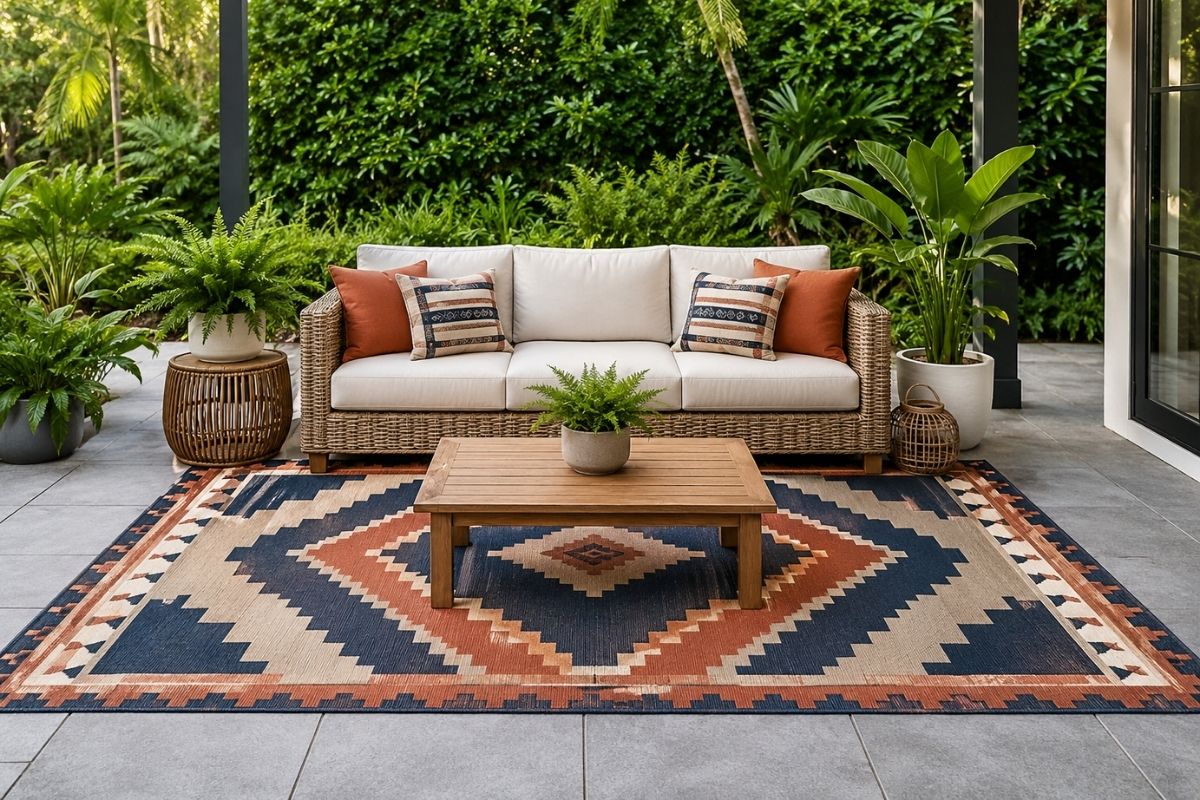
Recycled PET woven into a geometric diamond or medallion pattern in warm natural tones (terracotta, ochre, cream, rust) delivers the visual warmth of a handmade kilim with synthetic durability. The pattern works hardest in Mediterranean-style patios, tropical schemes, and warm-toned outdoor spaces. It looks deliberate alongside rattan furniture, terracotta pots, and natural stone. Avoid: high-saturation red or bright primary versions — these fade unattractively and overwhelm modest-sized outdoor spaces.
Boho outdoor (jute-look polypropylene)
A polypropylene rug woven to mimic jute or natural sisal texture — the same earthy tone and irregular surface, but fully synthetic and weatherproof. Works well in planted gardens, cottage-style patios, and balconies where a natural fibre look fits the scheme but rain exposure makes real jute impractical. The texture reads as relaxed and organic rather than designed. Best with painted timber furniture, mixed ceramic pots, and unpretentious planting; less successful with sleek aluminium furniture or very contemporary schemes.
Tropical and patterned
For a tropical patio, a large-scale botanical print or palm-leaf pattern in a recycled PET flatweave extends the planting theme to the floor plane. The pattern works in outdoor spaces that are already fully committed to a tropical scheme — too much visual competition in a restrained garden. If the furniture and planting are doing the tropical work, a plain neutral rug is the better choice; a bold botanical rug is for schemes where the rug is a deliberate design statement.
Frequently Asked Questions
- What material is best for an outdoor rug?
- Polypropylene (also called olefin or propylene) is the most durable and weather-resistant outdoor rug material — UV-stable, waterproof, resistant to mold and mildew, and easy to clean. Recycled PET (from plastic bottles) offers similar performance with slightly better sustainability credentials. Natural fiber rugs (jute, sisal, seagrass) are appropriate for covered patios in dry climates but deteriorate in rain and sustained moisture.
- How do I size an outdoor rug for a patio?
- For a dining area: all furniture legs should fit on the rug when chairs are pulled out to seated position — typically 2.5–3m × 3.5–4m for a standard 6-seat table. For a lounge area: all seating front legs at minimum on the rug, with 30–45cm extension beyond the sofa front. For a balcony: a 120×180cm to 150×240cm rug anchors the seating without blocking walkways.
- How do I clean an outdoor rug?
- For polypropylene and recycled PET rugs: rinse with a garden hose, scrub with a brush and mild soap or outdoor rug cleaner, rinse thoroughly, and allow to dry flat (ideally hung over a railing or draped over furniture). Flip the rug and allow both sides to dry completely before returning to position. For stubborn stains: a dilute solution of white vinegar and water, or an outdoor fabric cleaner.
- Do outdoor rugs get moldy?
- Synthetic outdoor rugs (polypropylene, recycled PET) are mold and mildew resistant as long as they can dry out after rain. A rug left saturated on a non-draining concrete surface for extended periods can develop surface mold — the solution is to raise it off the surface to allow airflow, or bring it inside or under cover during extended wet periods. Natural fiber rugs are much more susceptible to mold and should not be used in consistently wet conditions.