Tropical Outdoor Patio Design Ideas
Quick Answer
A tropical outdoor patio is defined by large-leaf tropical plants (banana, bird of paradise, monstera), natural materials (rattan, teak, stone), a shade structure for midday sun, warm string lighting for evening atmosphere, and water as an element. The design goal is an enclosed, lush retreat — not a sparse open space.
Design Principles
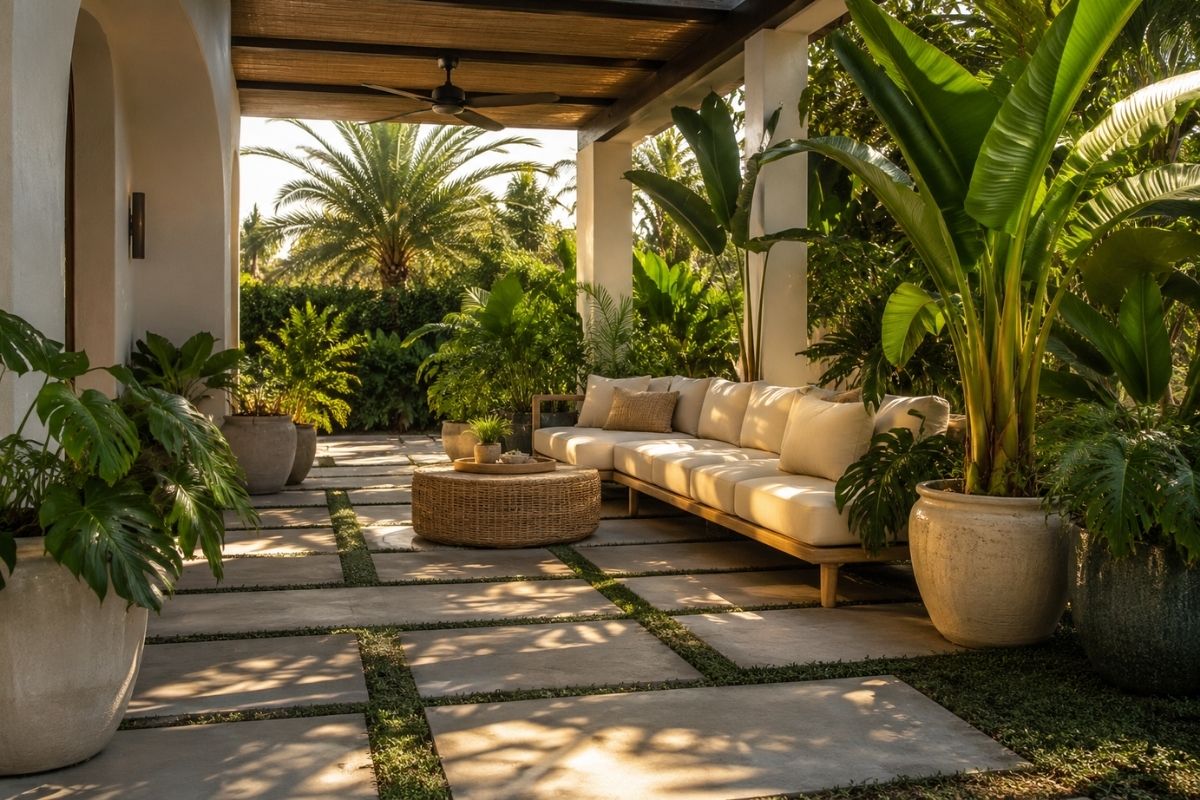
A tropical patio succeeds when it creates the sensory qualities of a tropical environment: shade from overhead, the sound of moving water or rustling leaves, enclosed lush planting that creates a sense of enclosure, and warm evening light that transforms the space after dark.
The opposite of a successful tropical patio: a paved open square with a plastic furniture set and three potted plants at the edges. Scale, enclosure, and plant density are the decisive factors.
Key principles:
Enclosure creates atmosphere. A patio that is open on all sides feels exposed, not tropical. Enclosure can be created through planting (screening on the perimeter), structures (pergolas, shade sails), screens (bamboo, timber), or a combination. The feeling of being contained within a lush space is the core tropical patio quality.
Density of planting. Sparse individual plants on a bare paved surface is not tropical. Mass planting — multiple specimens of large-leaf species creating a continuous green wall or canopy — creates the lush quality that defines tropical environments.
Natural materials throughout. The material palette should be consistently natural: wood, stone, terracotta, rattan, bamboo. A single piece of white plastic furniture or a synthetic-material rug breaks the naturalistic quality of a tropical space.
Plants and Planting
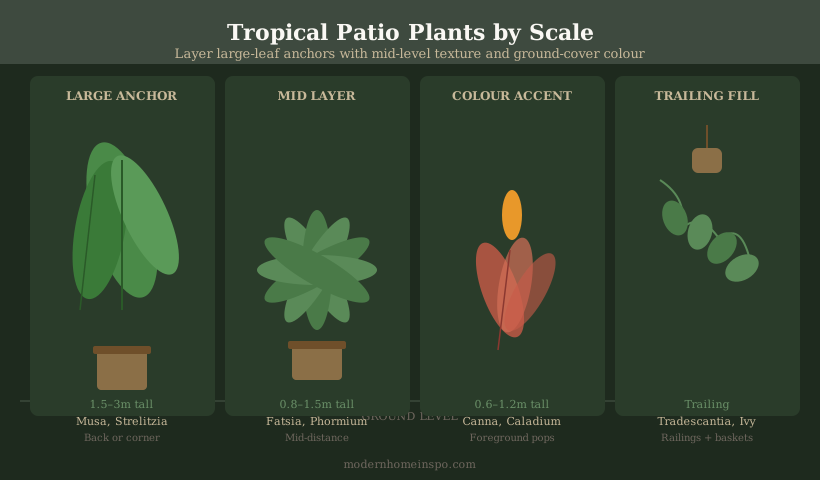
The plants are the most important element of a tropical patio. The key is choosing species with large, dramatic foliage that creates immediate visual impact.
Large-leaf impact plants:
- Banana (Musa): The most immediately tropical plant available. Even a single large banana establishes the mood. Hardy varieties exist for temperate climates.
- Bird of paradise (Strelitzia reginae or S. nicolai): Dramatic paddle-shaped leaves and an architectural form. Flowers are a bonus.
- Elephant ear (Alocasia, Colocasia): Enormous leaves in many varieties. Not frost-hardy but effective in pots brought in for winter.
- Canna: Large strappy leaves in green or bronze, colorful flowers. Effective in mass planting.
- Palms: Trachycarpus fortunei (Chusan palm) is frost-hardy and genuinely tropical-looking. Chamaerops humilis for smaller spaces.
Screening plants:
- Bamboo (clumping varieties rather than running — which spreads aggressively)
- Phormium (New Zealand flax) for height without invasiveness
- Bamboo screening panels as an instant structural solution
Pots vs. ground planting: In a patio (paved or decked surface), large plants need substantial pots — minimum 40–50cm diameter for structural plants. Terracotta, glazed ceramic in earthy tones, and concrete pots fit the natural material palette.
Materials
Paving: Natural stone (slate, granite, limestone, sandstone), concrete pavers in warm gray or buff tones, or terracotta tile. Avoid bright white tile (reflects too much light and reads as Mediterranean or pool-adjacent rather than tropical) and standard gray concrete (too urban).
Furniture materials: Teak (the most durable hardwood for outdoor use), iroko, or other FSC-certified hardwood. Rattan and wicker (synthetic rattan for outdoor use — UV and moisture-treated) for chairs and occasional pieces. Bamboo for accent pieces and smaller elements.
Textiles: Outdoor cushion covers in canvas, Sunbrella fabric (fade-resistant), or similar outdoor-rated fabric in natural, warm tones — cream, warm gray, olive green, terracotta. Avoid bright colors that look cheap in outdoor light and fade quickly.
Shade and Structure
Usability in warm weather depends on adequate shade. An unshaded patio in direct sun is unusable for significant portions of the day.
Shade sail: A canvas or HDPE mesh fabric stretched between anchor points creates flexible shade coverage. Multiple overlapping triangular sails cover irregular areas. Choose natural canvas or deep neutral tones — bright primary colours immediately break the naturalistic quality of a tropical scheme.
Pergola with climbing plants: A pergola framework allows wisteria, climbing roses, or tropical-looking climbers to form a living green canopy over 2–4 seasons. For post sizing, materials, structural requirements, and climbing plant selection, see Pergola Design Ideas.
Thatched or bamboo structure: The most immersive tropical choice. A bamboo pole frame with a palm-frond or reed-thatch roof creates authentic tropical character that no fabric sail achieves. More expensive and requires a specialist — but for a committed tropical patio it reads as architecture, not garden accessory.
Market umbrella: A large (3m+) market umbrella in natural canvas provides immediate shade without construction. Less architectural but instantly deployable and moveable. Choose natural canvas or dark neutral (charcoal, olive) — avoid bright UV-coloured canopies.
Lighting
Tropical patios have specific lighting needs that generic outdoor schemes don’t address. For the full system — string light rigging, IP ratings, catenary wire, solar vs wired — see Outdoor Lighting Ideas. The tropical-specific considerations:
Colour temperature and plant rendering: Use 2200–2700K warm white only. Cooler temperatures (4000K+) make tropical foliage look grey-green and washed — the deep greens and warm amber tones of banana leaves, palms, and canna disappear. Warm light makes plants glow.
Uplighting structural plants: Low-voltage uplighters aimed at palms, banana stems, and tall bamboo create silhouette and shadow effects against walls and screening that define the tropical evening atmosphere. Position uplighters at the base of each structural plant, angled slightly off-vertical to avoid dead-flat overhead shadows. Spike-mount uplighters allow repositioning as plants grow.
Lanterns for dining and surfaces: Outdoor lanterns with pillar candles on the dining table and on side surfaces provide flicker that fixed lighting cannot replicate. Choose lanterns with substantial weight and deep sides — exposed balcony or patio wind extinguishes shallow candle holders. For a tropical scheme, large brass or aged bronze lanterns complement natural materials better than polished stainless steel.
Water Elements
Moving water is one of the most effective sensory additions to a tropical patio — the sound masks urban noise, creates enclosure, and contributes more to the tropical atmosphere than any single item of furniture.
Water blade (wall-mounted): A stainless steel or powder-coated blade bolted to a fence or rendered wall discharges a smooth sheet of water into a trough reservoir below. Clean, architectural, and continuous. Supply cost: £200–£500 for the blade unit; installation requires a power point and a recirculating pump in the trough (typically £80–£150 additional). Total installed: £400–£800. Maintenance: top up reservoir monthly in summer, clean the pump filter every 6–8 weeks, drain and store the pump if temperatures below -5°C are forecast.
Freestanding bowl or vessel fountain: A large glazed or concrete bowl (60–90cm diameter) with a recirculating pump and a riser pipe or bubble jet. No wall-mounting required — place anywhere there’s a power point in reach. Supply cost: £80–£250 for the unit. Maintenance: algae forms on the bowl interior within 2–4 weeks — scrub with a soft brush and refill; add a small amount of pond algaecide to extend clean intervals to 6–8 weeks.
Recirculating millstone or natural stone feature: A drilled millstone or granite boulder with water trickling through the centre onto a gravel bed concealing the reservoir. The most naturalistic option for a tropical-inspired scheme — looks like it belongs in the landscape rather than being installed. Supply cost: £300–£700 for quality stone; self-installation possible with a submersible pump kit (£50–£100). Maintenance: low — the gravel conceals algae growth, and the pump requires only seasonal cleaning.
Water plants in containers: A large glazed pot (45cm+ diameter, sealed or used with an inner plastic container) filled with water allows tropical aquatic plants — papyrus (Cyperus papyrus), water hyacinth, dwarf lotus — to complete the planting scheme. These require no pump; just maintain the water level in summer. Bring tender aquatics indoors before first frost.
Furniture
Dining set: A teak or hardwood outdoor dining table with matching chairs for a clearly defined dining zone. Round or oval tables encourage conversation; rectangular tables seat more people.
Lounge seating: A deep-seat sofa or lounge chairs with outdoor cushions define a second zone for relaxation. Position under the primary shade structure.
Side tables: Small rattan or teak side tables beside seating for drinks and small items.
Hammock: If space allows, a hammock strung between two trees or structural posts adds a playful tropical element and is often more used than formal lounge furniture.
Tropical Patio in a Temperate Climate
A tropical aesthetic is entirely achievable in a UK or Northern European climate, but it requires distinguishing between tender plants (spectacular but need winter management) and genuinely hardy tropical-looking plants (no intervention needed).
Tender plants worth the winter effort
Banana (Musa basjoo or Musa sikkimensis): In October, cut back stems to 1m height. Wrap the remaining stub and crown tightly in horticultural fleece (two layers), then wrap in hessian or bubble wrap tied with garden twine. Mulch the base with 15–20cm of bark or straw. The wrapped stem survives to -10°C; the roots are hardier still. Unwrap in April. Musa basjoo is the hardiest species and can be left in the ground in most UK gardens with this treatment.
Elephant ear (Alocasia/Colocasia): Not reliably frost-hardy. After the first frost blackens the foliage, dig up the tubers/corms, allow to dry for a week, then store in barely moist compost or dry peat at 10–12°C minimum (a frost-free shed or garage works). Replant in May once soil temperatures warm.
Canna: Treat like elephant ear. Cut foliage after frost, dig the rhizomes, dry, store in dry compost above freezing, replant late May. Cannas multiply generously — divide the stored clumps each spring to increase your stock.
Hardy tropical-looking plants (no winter care needed)
These stay in the ground year-round in UK climates and provide the permanent backbone of a tropical planting scheme:
| Plant | Hardiness | Tropical quality | Notes |
|---|---|---|---|
| Trachycarpus fortunei (Chusan palm) | Hardy to -15°C | Instant palm silhouette | Slow-growing; buy the largest affordable specimen |
| Phormium tenax (New Zealand flax) | Hardy to -10°C | Bold strap leaves, architectural | Bronze and variegated varieties available |
| Melianthus major (honey bush) | Hardy to -5°C | Large glaucous blue-green serrated leaves | Cut to ground in March; regrows fast each year |
| Tetrapanax papyrifer (rice paper plant) | Root-hardy to -10°C | Enormous lobed leaves, tree-sized | Tops may die back in cold winters; roots resprout |
| Fatsia japonica | Hardy to -15°C | Large glossy lobed leaves year-round | Shade-tolerant; evergreen structure |
| Bamboo (Fargesia species) | Hardy to -20°C | Vertical canes, rustling in wind | Clumping — will not spread invasively |
Season extension
A wall-mounted infrared patio heater extends the comfortable season for tropical patio use from September into November — see Pergola Design Ideas for heater specification and installation guidance. A shade sail or pergola canopy retains warmth underneath on cool evenings and protects tender foliage from the first light frosts.
Design Tip
The single most impactful improvement to any underperforming tropical patio is adding more plants at larger scale. If the planting feels sparse, double the quantity and increase pot sizes. Dense, large-scale planting creates the lush enclosure that defines the tropical aesthetic; sparse individual plants in small pots look like a plant retailer display, not a garden.
Frequently Asked Questions
- What plants make a patio look tropical?
- The most effective tropical patio plants for lush effect: banana (Musa), bird of paradise (Strelitzia), elephant ear (Alocasia/Colocasia), monstera deliciosa, canna lily, palms (Trachycarpus or Chamaerops for temperate climates), and bamboo. Large-leaf plants in mass plantings create the enclosed lush quality of tropical landscapes; scattered individual plants do not.
- What materials suit a tropical patio?
- Natural materials: teak or other hardwood furniture, rattan and wicker, natural stone or concrete pavers (not bright white), terracotta pots, bamboo screening. Avoid plastic furniture, bright aluminum, or synthetic-looking materials — these fight the natural organic quality of a tropical aesthetic.
- How do I create shade on a tropical patio?
- Shade sail (fabric stretched between anchor points), a pergola with climbing plants, a thatched or bamboo roof structure, or a large market umbrella in a neutral canvas fabric. The shade structure defines the 'room' of the patio and is one of the most important design decisions for usability in warm climates.