Cozy Balcony Decor Ideas for Small Outdoor Spaces
Quick Answer
A cozy balcony needs: furniture sized to leave a circulation path (two chairs + a small table fits most balconies), an outdoor rug defining the 'floor', plants creating vertical interest and privacy screening, warm string or pendant lighting for evening use, and some form of weather protection for regular use. Every element should be deliberately chosen — small spaces read clutter immediately.
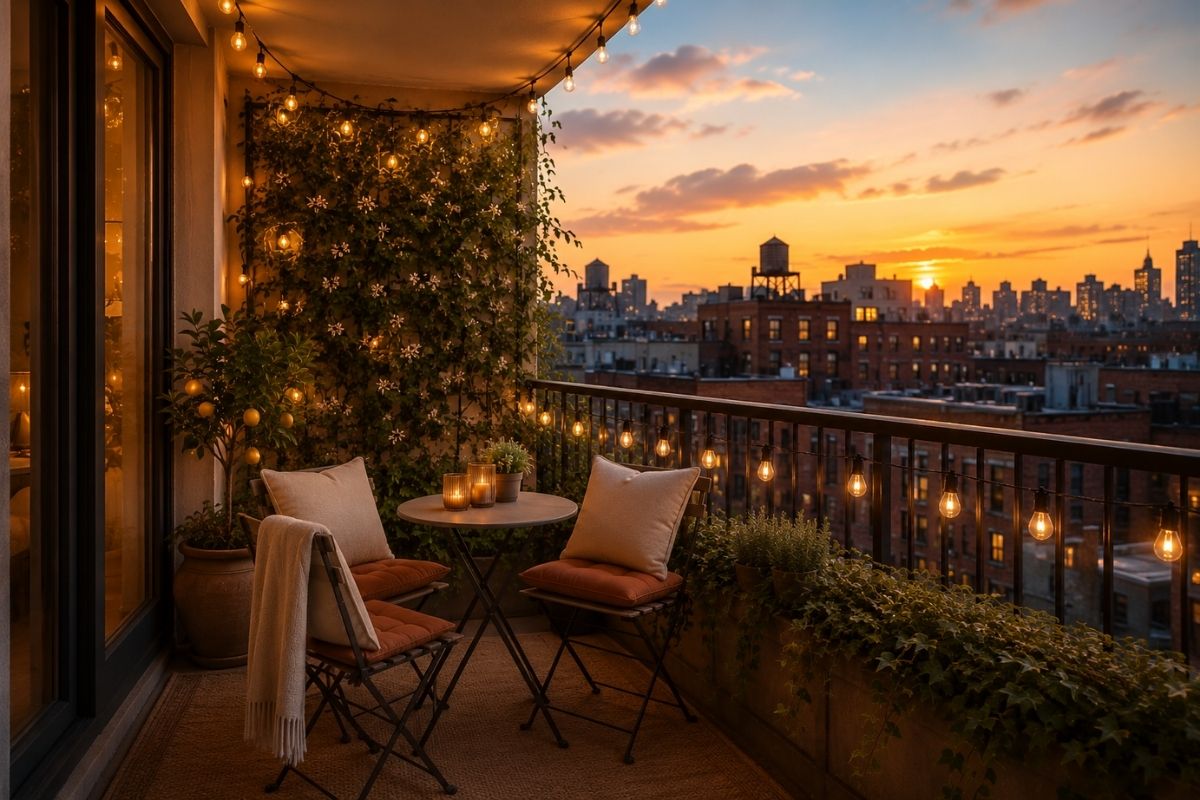
Small Space Principles
A balcony is typically the smallest outdoor space available — often 4–8 square meters on an apartment. Every square meter matters, and clutter is visible immediately at this scale.
The three principles for a cozy balcony:
1. One primary use area. A small balcony works best organized around one primary use — seating and conversation — with everything else supporting that use. Trying to fit a dining zone, a lounge zone, and a plant area into 6 square meters typically means none of them work well.
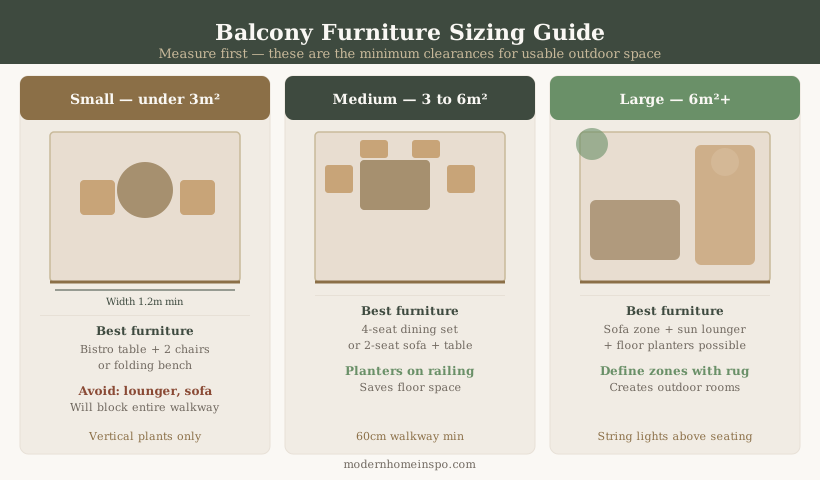
2. Furniture sized for the actual space. Balcony furniture must be measured before purchase. Most garden furniture is sized for patios and gardens; standard outdoor sofas and dining sets are far too large for apartment balconies. Folding bistro chairs, armchairs with slim profiles, and small round tables are the appropriate scale.
3. Vertical space. The floor area of a balcony is fixed; the vertical space — railings, walls, overhead — offers additional surface for plants, lights, and storage without claiming floor area.
Furniture
The most versatile balcony arrangement: Two folding or stacking chairs with a small round or square table (50–60cm diameter). This fits on almost any balcony, folds away when space is needed, and is lightweight for rearranging.
For slightly larger balconies (6m²+): A two-person loveseat or bistro set (two chairs + round table) with a small side table. This fits approximately 1.5m × 2.5m of floor space when in use.
Chair types for balconies:
- Folding metal bistro chairs: classic, compact, stack for storage, weather-resistant
- Rattan-effect armchairs: more comfortable, but check dimensions carefully
- Folding director’s chairs: lightweight, fold flat, comfortable for extended sitting
Materials: Powder-coated steel, aluminum, or weather-treated rattan. Avoid untreated wood without waterproofing on an exposed balcony — it deteriorates quickly.
Important
Measure your balcony before buying any furniture. Note the railing-to-wall depth, the width, and any fixed elements (drainage outlets, balcony door swing). A chair that is 10cm too wide for the balcony is unusable and non-returnable.
Plants and Vertical Greening
Plants transform a bare concrete or tiled balcony into an outdoor room. The key is choosing plants suited to container life and the specific conditions of the balcony.
Container essentials: Use pots with drainage holes. Group pots of similar watering needs together. In exposed balconies, terracotta pots dry out faster than plastic or glazed ceramic. Self-watering planters are useful on balconies where you’re away frequently.
By sun exposure:
South or west-facing (full sun, often warm and sheltered): Lavender, rosemary, thyme, sage — all drought-tolerant and fragrant. Patio roses (compact varieties: ‘Sweet Dream’, ‘Twist’). Pelargoniums. Succulents and sempervivum in terracotta. Ornamental grasses (Stipa, Pennisetum — movement and texture in wind).
North or east-facing (shade or partial shade): Ferns (Dryopteris, Polystichum — architectural and shade-tolerant). Hostas in large pots. Begonias for summer colour. Heuchera for year-round foliage. Small-leaf ivy trailing from pots at height.
Exposed wind-prone balconies: Compact sedums and sempervivum. Dwarf conifers. Any trailing pelargonium (the wind movement actually benefits them). Avoid tall grasses which can topple — weight the pots with gravel in the base.
Vertical space strategies:
- Railing planters (hook-over trough style) for trailing nasturtium, bacopa, or calibrachoa along the outside face of the railing — creates a flower fringe visible from street level
- Wall-mounted pocket planters (felt or powder-coated steel): herbs on a sunny wall (basil, parsley, chives) within reach of the kitchen door
- Trellis panel against the wall with a climbing plant trained across it: sweet peas for summer scent, small-leaved ivy for year-round cover
Screening with plants: Bamboo (Fargesia — clumping, non-invasive) in a large (45cm+) heavy glazed pot creates rapid height and screening within one season but requires consistent watering. Tall ornamental grasses (Miscanthus ‘Morning Light’ in a 35cm pot) are more drought-tolerant and survive periods of neglect better than bamboo.
The layering principle: Arrange pots in three height tiers — tall (60cm+) at the railing, medium (30–50cm) in the middle, and low trailing (10–20cm) at the front. This vertical gradient fills the balcony without consuming floor space and makes the planting look designed rather than accumulated.
Lighting
String lights from wall to railing are the single highest-impact balcony lighting addition — they create an enclosed overhead canopy of warm light that transforms the balcony from a corridor into a room. Use outdoor-rated IP44 warm-white (2700K) bulbs only — cool white kills the intimate quality instantly.
Balcony-specific fixing method (no drilling): Outdoor-rated adhesive hooks on the wall (rated 2kg+) at one end; wrap around a railing post at the other. In rentals where wall hooks are not permitted, a shepherd’s hook ground stake in a heavy pot provides the second anchor point.
Wind-resistant lanterns: A table lantern with a real pillar candle adds flicker that string lights cannot — essential for evenings when you want atmosphere beyond uniform overhead glow. Choose lanterns with deep sides and a weighted base for exposed balconies.
For IP ratings, catenary wire, solar vs wired comparison, and the complete outdoor lighting system, see Outdoor Lighting Ideas.
Outdoor Rug
An outdoor rug defines the seating zone, softens hard flooring, and makes the space look finished. For a standard apartment balcony, 120×180cm fits under two chairs and a table; 150×240cm suits a slightly larger space.
The balcony-specific rule: On an exposed upper-floor balcony, lightweight rugs blow in wind. The furniture weight holding the rug down is the solution — a rug where all chair legs land on it stays put. Leave 15–20cm clear border around the rug edge so the space doesn’t feel cramped.
For material comparison (polypropylene vs recycled PET vs natural fiber), UV durability specs, and cleaning by surface type, the complete guide is at Best Outdoor Rugs to Add Comfort.
Privacy and Weather Shelter
Privacy screening:
- Bamboo panel screens attached to the railing with cable ties — immediate, inexpensive, effective
- Privacy sail fixed between the wall and the railing — covers one open side
- Outdoor curtains hung from a ceiling-mounted rod — adjustable, soft, add character
Weather shelter:
- A wall-mounted retractable awning for sun protection (requires wall fixing and budget)
- A balcony parasol in a weighted base — more flexible and lower cost
- A clear vinyl windbreak panel for exposed balconies — keeps wind off without blocking light
Seasonal Balcony Swaps
A balcony that works in June and sits unused from September to March is a missed opportunity. Most balconies are usable at least 9 months of the year with the right seasonal adjustments.
Late spring / summer (May–September)
- Textile: Outdoor cushion covers in UV-stable fabric, washed linen or canvas throw over the chair back for cool evenings
- Plants: Summer annuals in railing planters (calibrachoa, trailing petunia), herbs actively used — basil in the sunniest spot
- Lighting: String lights on a timer — set to come on at sunset, off at 11pm
- Shade: A balcony parasol in a heavy base, or a tension shade sail fixed to the wall at one corner — essential on a south-facing balcony in July
- Table: Keep it out constantly; a small side table holds a drink, a candle, and is reason enough to step outside
Autumn / early winter (October–December)
- Swap summer cushion covers for weathered wool or fleece (store the summer ones indoors)
- Add a thick merino or fleece throw, heavy enough to actually use outdoors
- Bring in frost-tender plants (begonias, tender succulents, basil) — replace with hardy winter interest: ornamental kale, winter pansies, or forced hyacinth bulbs
- Add a portable outdoor heater (freestanding infrared or gas patio heater) — one hour of warmth transforms an autumn evening
- Replace the candle lantern with a larger storm lantern filled with real pillar candles — larger flame, more warmth in lower temperatures
Winter (January–March)
- The balcony in winter is primarily visual rather than functional
- Keep winter-interest containers: dwarf conifer, heather, skimmia (berries), or ornamental grasses — these need no intervention and remain attractive
- String lights left in place provide visual warmth from inside even when the balcony isn’t used
- Clean and store cushions; fold chairs flat against the wall
- Check railing planters after frost — roots in small pots freeze solid and crack terracotta; ceramic and plastic pots survive better than unglazed terracotta
Styling Details
Small accent objects: A ceramic planter, a small hurricane lantern, a tray with candles on the table. In a small space, one or two deliberate accent objects is enough — more reads as clutter.
Cushions: Outdoor cushions on the chairs (stored indoors when rain is expected) add comfort and color. Choose UV-stable fabric in a tone that complements the plant colors and rug.
Side table: Even a very small side table (a 30cm round table, or a small rattan side table) improves usability — a surface for a drink or a phone is necessary for comfortable outdoor sitting.
Nothing broken or faded: On a small balcony, damaged or faded items are impossible to ignore. Replace any faded cushions, cracked pots, or rust-streaked furniture. The small scale of a balcony means imperfect items dominate the visual field more than they would in a larger space.
Frequently Asked Questions
- What furniture fits on a small balcony?
- For a standard apartment balcony (approximately 1.5–2m × 3m), two folding or bistro chairs with a small round or square table between them is the most practical arrangement. For slightly larger balconies, a loveseat or two-person bench with a small side table works. Measure the balcony before purchasing any furniture and allow a minimum 70cm walkway for comfortable movement.
- What plants work on an apartment balcony?
- Balcony plants must survive in containers, often with limited shelter. Effective choices: dwarf or patio roses (for color), lavender (aromatic and hardy), ornamental grasses (movement and texture), herbs (practical and fragrant), trailing plants for railing pots (trailing geraniums, bacopa, nasturtium), bamboo in a large pot for screening.
- How do I make a balcony cozy in the evening?
- String lights are the most effective single addition — warm Edison bulbs strung from the wall across the balcony create immediate evening atmosphere. Candles in lanterns on the table add flicker. A small outdoor heater extends the usable season. These three additions cost under $150 combined and transform an empty balcony into a usable evening outdoor room.
- How do I get privacy on a balcony?
- Bamboo screening panels attached to the railings create immediate privacy. A privacy sail fixed to the wall at one side and the railing at the other covers gaps. Tall plants in pots along the railing (bamboo, ornamental grasses, tall herbs) create living privacy at low cost. Outdoor curtains on a ceiling-mounted rod provide adjustable privacy and add softness.