Boho Bedroom Ideas: How to Do Bohemian Without It Looking Chaotic
Quick Answer
A successful boho bedroom works through a defined palette (warm earthy tones as dominant, 2–3 pattern scales that share a colour), a consistent material language (rattan, wood, jute, linen — natural always), layered textiles in odd numbers (3 cushion sizes, 2 throw types), and controlled plant styling. The chaos feeling comes from mixing too many unrelated colours, not from mixing patterns.

What Is Boho Design?
Bohemian design in its original sense described the lifestyle of artists, writers, and travellers who collected objects from different cultures and traditions — layering them in living spaces that reflected their owners’ experiences rather than following a single aesthetic programme. A room that contained a Moroccan kilim, a Japanese ceramic, an Indian block-print cushion, and a vintage European oil print was boho not because those things “went together” in a formal sense, but because they were all chosen with genuine interest.
Modern boho bedroom design inherits this ethos. The best boho rooms feel personal and accumulated. The worst ones feel like a global craft market visited in an afternoon.
The difference is underlying logic. Successful boho design works because:
- There’s a consistent palette that connects disparate objects
- Natural materials dominate, creating a consistent material language
- Pattern mixing follows scale rules that prevent chaos
- The layering is abundant but organised into distinct zones
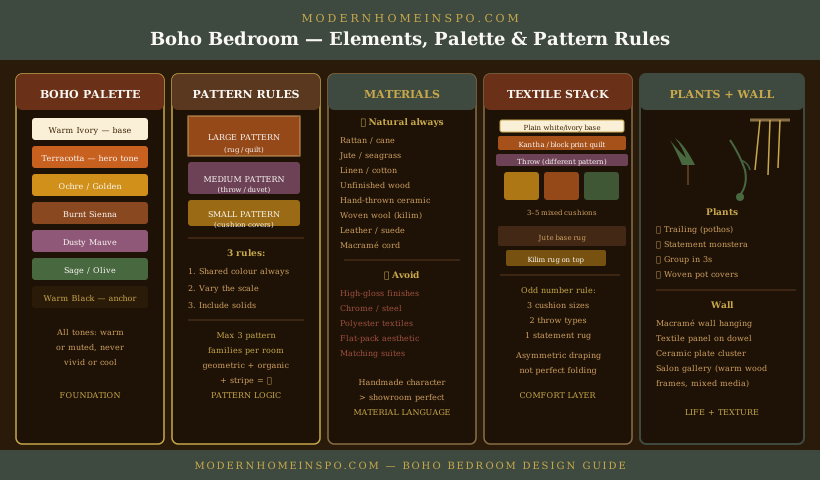
Boho Colour Palette
The boho palette draws from the natural world and global textile traditions. Its dominant tones are warm:
Core earthy palette:
- Warm ivory / warm white — the base that lets everything else read (not cool white)
- Terracotta / rust — the defining boho accent
- Ochre / golden yellow — warmth and vitality
- Burnt sienna / warm brown — grounding earth tone
- Dusty mauve / blush — the femme element
- Sage green / olive — botanical connection
What connects them: Every colour in a boho palette should be warm or muted, not vivid or cool. Vivid saturated colours — electric blue, lime green, hot pink — don’t belong in boho; they read as contemporary maximalism instead.
The black element: A small proportion of warm black (not blue-black) in stripes, typography, or ironwork grounds the palette. It prevents the room from feeling too soft and provides the contrast the eye needs.
Using the palette: Walls in warm ivory or a warm mid-tone. Bedding in ivory or a muted block colour. Textiles, cushions, and objects introducing the terracotta, ochre, mauve, and sage. Plants providing live green.
Pattern Mixing Rules
Pattern mixing is the element of boho design that most people fear, and the element that goes most wrong. The rules are simple:
Rule 1: Shared Colour
Every pattern in a room must share at least one colour with every other pattern. This is what makes pattern mixing feel curated rather than accidental. If your geometric cushion has terracotta, rust, and cream, any other pattern — a floral throw, a Moroccan rug — should contain at least one of those colours.
Rule 2: Vary the Scale
Mix pattern scales: one large pattern, one medium, one small. A large medallion rug + a medium-scale block print duvet + small geometric cushion covers = successfully layered. Three medium-scale patterns competing at the same scale = visual chaos.
Rule 3: Include Solids
Not every textile needs a pattern. A plain terracotta velvet cushion, a solid ivory throw — these solids “rest” the eye between patterns and make the patterned pieces read more clearly.
Rule 4: Max Three Pattern Types
Geometric, organic/floral, and stripe are the three pattern families that work together most reliably. Mixing four or five pattern families (check, plaid, animal print, tapestry, floral) simultaneously is where rooms typically tip from eclectic to incoherent.
Furniture and Materials
Boho furniture prioritises natural material, handmade quality, and some evidence of age or origin. New mass-produced furniture in glossy finish fights the aesthetic.
Bed frame / headboard: Rattan or cane headboard (the most characteristically boho choice), a low-platform wooden bed with visible grain, or a macramé panel mounted above the bed as a headboard alternative. An upholstered headboard in a natural linen or a globally-influenced print fabric also works.
Seating: A rattan bucket chair, a low pouf in Moroccan leather or kilim fabric, or a vintage wooden chair with a cushion. Boho rooms nearly always include a place to sit that isn’t the bed — it contributes to the lived-in, habitable quality.
Storage: Wicker or seagrass baskets for blanket storage and laundry. An aged wooden chest of drawers, ideally with some patina or hand-painting. Open shelving (distressed wood, industrial pipe bracket) displaying ceramics, books, and small objects.
Tables: A low wooden or painted vintage bedside table, or a rattan side table. Stack of books as a supplementary side table.
Textile Layering
The bed in a boho bedroom should look abundant — not cluttered, but generous. The layering approach:
Base: White or warm ivory sheet set. The base should be plain — it’s the canvas.
Quilt / duvet cover: A global textile or block-print quilt is the signature boho bed piece. Kantha quilts (stitched Indian cotton in patchwork patterns), Moroccan cotton blankets, or block-print duvet covers. This is where the largest pattern sits.
Throw: A second textile, in a different pattern family or as a solid earthy tone. Draped asymmetrically across the bed rather than folded neatly. Asymmetry is a boho signature.
Cushions (5–7): Sleeping pillows in plain cases, then 3–5 decorative cushions. Vary sizes: 60×60cm, 45×45cm, a long 60×30cm bolster. Vary patterns: a geometric, a solid, an embroidered, a tasselled. Odd numbers always feel more natural.
Floor layer: A layered rug — jute or natural base rug plus a smaller kilim or vintage rug on top. The rug layers add pattern at floor level and the visual richness the eye reads as boho.
Plants and Greenery
Plants are non-optional in a boho bedroom. The natural, living element completes the connection to organic materials that the style requires.
Trailing plants: Pothos, string of hearts, tradescantia, or philodendron in a hanging planter or on a high shelf, trailing downward. The trailing habit adds movement and visual interest that still plants don’t have.
Statement plants: A bird of paradise or large monstera in a woven seagrass basket or a hand-thrown ceramic pot. One large plant in a corner or beside the bed makes a stronger statement than many small ones.
Clustering: Group three plants of different heights — a tall statement plant, a medium bushy plant, and a trailing or small plant at the base. The triangular arrangement is visually stable and makes each plant read more clearly.
Low-light options for bedrooms: Pothos, ZZ plant, Chinese evergreen, and cast iron plant all tolerate the lower light of most bedrooms. Succulents and cacti require more light than most bedrooms naturally provide.
Wall Décor
Boho wall treatment goes beyond framed art. The wall in a boho bedroom is a surface for texture, pattern, and objects.
Macramé wall hanging: The most immediately boho wall piece. Hang above the bed or on an empty wall. Large-scale macramé (80–120cm wide) reads as a considered installation; small pieces (under 40cm) look like craft-fair add-ons.
Textile wall art: A kilim, a block-print panel, or a woven tapestry mounted on dowels. Global textile as wall art has more visual richness than equivalent-sized framed prints.
Plate arrangements: A group of handmade or hand-painted ceramic plates mounted on the wall. Mix sizes, keep the palette consistent.
Salon gallery: A mix of global prints, botanical illustrations, personal photographs, and small mirrors arranged salon-style (see bedroom wall décor article). Keep frames in warm wood or black metal.
Dreamcatcher: Used sparingly (one, not multiple), above the bed or near a window. More authentic boho items include vintage Huichol yarn paintings, Shipibo embroidery panels, or traditional kantha panels.
Global Textile Sourcing
The textiles are the most important element of a boho bedroom — and the area where sourcing origin matters most. A mass-produced “Moroccan-style” cushion and an actual kilim cushion sourced from a Moroccan cooperative produce very different results.
Kantha quilts: Originate in Bengal (India and Bangladesh), made from layered recycled saris stitched with small running stitches. Authentic kantha quilts are irregular, reversible, and get softer with washing. Look for hand-stitched originals from fair-trade Indian textile co-ops; machine-stitched “kantha-style” versions exist but lack the texture and wear quality of handmade.
Kilim rugs and cushions: Turkish, Afghan, and Caucasian kilims are flat-woven wool rugs with geometric tribal patterns. Vintage kilims (20–50 years old) are available at antiques fairs and online at prices competitive with new alternatives, and have the colour variation and wear that makes them look genuinely collected rather than purchased. New kilims from Turkish and Afghan producers are also available through specialist importers.
Block print fabric: Hand block-printed cotton from Rajasthan is the most accessible authentic boho textile. Each print has slight irregularity that machine printing cannot replicate. Block-printed duvet covers, pillow covers, and tablecloths used as throws are available from Indian craft co-operatives and specialist online retailers.
Macramé: Hand-knotted macramé from independent makers (Etsy has a genuine community of macramé artists globally) is significantly better quality than mass-produced equivalents and often similarly priced. Look for natural undyed cotton rope rather than dyed or synthetic.
Where to source authentically without a specialist retailer:
- Import direct from fair-trade co-operatives (search by country and textile type)
- Antiques fairs and estate sales for vintage kilims, embroidery, and global textile art
- Charity shops in multicultural urban areas often have genuine imported textiles
- Online second-hand platforms (eBay, Vinted, Depop) for vintage Indian, Moroccan, and Turkish textiles
Boho on a Budget
Boho is the most budget-friendly major interior style because it:
- Celebrates vintage and second-hand objects rather than requiring new
- Works with textile layering rather than structural renovation
- Values handmade and market pieces over designer labels
- Benefits from natural materials that are often less expensive than synthetic alternatives
Highest-impact budget boho purchases:
- A kantha quilt (£30–60) — immediate boho bed transformation
- Two rattan or seagrass storage baskets (£20–40)
- A trailing pothos in a woven pot (£15–25)
- A kilim-style cushion cover (£15–30)
- A macramé wall hanging (£25–50)
Second-hand sourcing: Vintage shops, Facebook Marketplace, and estate sales are boho-appropriate sources for furniture, ceramics, and textiles. A genuinely old piece — a wooden chest with patina, a vintage mirror with age spots — adds the character that new mass-produced equivalents are designed to approximate.
Frequently Asked Questions
- What is boho bedroom style?
- Boho (bohemian) bedroom style draws from global textile traditions, vintage pieces, natural materials, and a layered, eclectic approach. It typically features earthy warm tones, mixed patterns, natural fibres (rattan, jute, linen, cotton), trailing plants, and objects with hand-crafted character. It should feel personal and collected rather than designed to a catalogue.
- What colours are used in boho bedrooms?
- Boho bedrooms typically use warm earthy tones as the dominant palette: terracotta, rust, burnt sienna, warm sand, ochre, and dusty mauve. Greens appear through plants and occasionally through sage or olive textiles. White or warm ivory is used as the base to let coloured textiles read clearly. Cool greys and blues are less common in traditional boho.
- How do you layer textiles boho style?
- Start with a plain base (white or linen bedding), layer a patterned duvet cover or quilt, add a throw in a different pattern or solid warm tone, then add 3–5 cushions in mixed sizes with mixed patterns (geometric, floral, block print) that all share at least one colour. The key is odd numbers and pattern scales that vary (large/medium/small) rather than compete.
- What furniture is used in boho bedrooms?
- Rattan headboards or bed frames, low-profile wooden beds, wicker chairs, macramé or woven storage baskets, distressed wooden dressers, and natural-fibre rugs. High-polish or very modern furniture is avoided in favour of pieces with handmade character, natural grain, or vintage origin.
- Can you do a boho bedroom in a rental?
- Yes. Boho design relies heavily on textiles, plants, and freestanding furniture rather than fixed architectural interventions. A good rattan headboard (no drilling needed), layered rugs over existing flooring, macramé wall hangings on tension rails, and abundant plants create a thoroughly boho bedroom without a single wall fixture.