Cozy Bedroom Ideas That Make You Never Want to Leave
Quick Answer
A cozy bedroom is built in five layers: warm palette (honey, terracotta, caramel tones), warm lighting (2200–2700K, overhead off after dark), layered textiles (flannel, velvet, chunky knit), texture mix (minimum four textures — rough/smooth, matte/sheen), and atmosphere additions (candles, scent, plants, blackout curtains). The lighting temperature matters more than most people realise.

What Makes a Bedroom Feel Cozy?
Coziness — the Danish call it hygge, the Norwegians koselig, the Swedes mysig — is a specific feeling that a bedroom can be designed to produce. It’s not the same as comfort (which is about physical ease) or luxury (which is about quality and cost). It’s a psychological state: a sense of warmth, enclosure, intimacy, and security.
Research into environmental psychology suggests that coziness in interior spaces comes from a combination of:
- Thermal cues: Colours and materials that signal warmth to the brain before any physical sensation
- Scale: Spaces that feel appropriately enclosed rather than vast
- Sensory richness: Multiple textures, scents, and low-intensity sounds that engage the senses without demanding attention
- Light quality: Warm, low, directional light rather than bright, diffuse overhead illumination
Understanding these mechanisms means you can build coziness deliberately. It’s not luck or budget — it’s layering five specific elements in the right sequence.
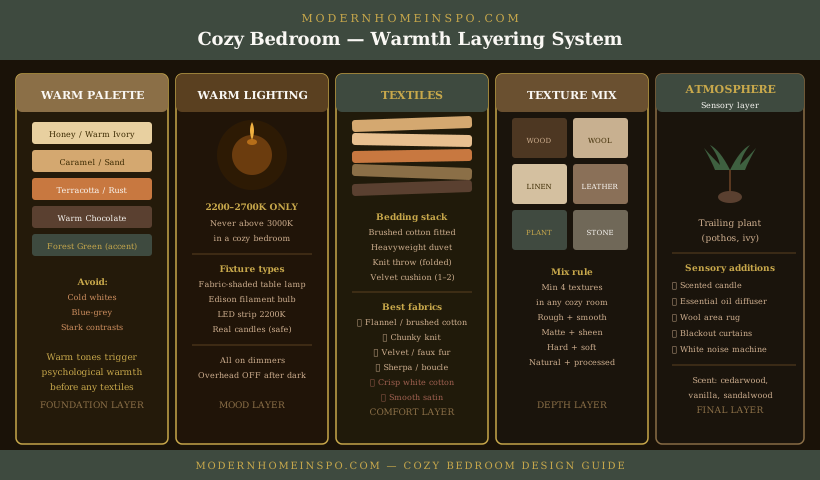
Warm Palette
The palette is the first layer and the foundation. Warm colours — those in the honey, amber, terracotta, rust, caramel, and chocolate family — trigger a psychological warmth response before any physical texture is involved. Cool colours (blue-grey, pure white, mint) can never achieve the same effect regardless of how many throws you add.
Cozy bedroom palette building blocks:
| Tone | Role | Example paints |
|---|---|---|
| Warm ivory / honey | Dominant wall | Farrow & Ball Pointing, Dulux Natural Hessian |
| Caramel / warm greige | Secondary, large furniture | Farrow & Ball Setting Plaster |
| Terracotta / rust | Accent, cushions or throw | Farrow & Ball Incarnadine, Dulux Terracotta Red |
| Warm chocolate | Grounding dark — wardrobe, rug | |
| Forest green | Botanical accent | Farrow & Ball Mizzle |
What to avoid: Blue-tinged greys, pure whites with cool undertones, and anything described as “contemporary cool” on a paint chart. These fight the warmth you’re trying to build and will always make the room feel colder than intended regardless of how warm the textiles are.
Dark bedroom cozy: Deep earthy colours — warm terracotta, dusty mauve, forest green — on all four walls make a bedroom feel like a cocoon. In rooms under 14m² this can work particularly well; the walls appear to come closer, which creates intimacy. Pair with warm lighting and pale bedlinen for contrast.
Lighting for Coziness
Lighting has a more powerful effect on the feeling of a room than any other single element. The same bedroom with 4000K overhead lighting feels clinical. With 2700K bedside lamps and the overhead light off, it feels entirely different.
The cozy lighting formula:
- After 7pm: Switch off all overhead lighting. Never turn it back on.
- Bedside lamps: On, at 2700K. Dimmed to approximately 30–50% brightness.
- LED accent strip (if installed): On, at 2200K. Behind headboard or under bed frame.
- Candles: One or two, in warm amber tones. The actual flicker of real flame creates an animation that LED lighting cannot replicate.
Temperature matters more than fixture: A beautiful pendant with a 4000K bulb will make a bedroom feel cold. A simple table lamp with a 2700K bulb will make it feel warm. Change the bulbs before changing the fittings.
Avoid: Smart lights set to “daylight” or “cool white” modes. Many people buy smart bulbs and then use colour modes that are completely inappropriate for a bedroom — vivid blue, cool white, or full-brightness white. If you have smart lighting, create a “bedroom evening” scene set to 2200–2700K at 20–40% brightness.
Textile Layers
Coziness is tangible — it’s felt as much as seen. The textile layer is where you build the physical warmth of a cozy bedroom.
Bedding Stack
Base: Brushed cotton or flannel fitted sheet. The slight nap on the surface traps air and feels warmer against skin than smooth percale.
Duvet: Heavyweight (12–15 tog for winter, 7–9 tog for year-round with a supplemental throw). A generous tog rating makes the bed feel substantial and inviting — a thin summer duvet in an otherwise cozy room reads as a miscalculation.
Throw: Folded across the foot of the bed or draped over one side. The most visually impactful textile addition. Chunky hand-knit or arm-knit throws in undyed wool, boucle, or sherpa fabric add immediate visual texture. The throw should be large enough to actually use — a decorative throw too small to wrap around yourself misses the point.
Cushions: Two to four cushions beyond the sleeping pillows. Velvet, knit, or faux-fur covers in warm tones. Vary the size: two large (60×60cm), two smaller (45×45cm). The visual abundance of cushions signals comfort.
Beyond the Bed
Rug: A large, thick rug that extends beyond the bed on both sides and at the foot. Wool or high-pile is warmest underfoot — the tactile difference between stepping onto cold floor and onto a thick wool rug is enormous. Warm cream, oatmeal, or earthy tones.
Curtains: Floor-to-ceiling in velvet, heavy linen, or thick cotton. Curtains that puddle slightly at the floor in a cozy room work where they wouldn’t in a formal space. Full blackout lining for darkness plus the acoustic padding that adds quietness.
Armchair throw: A separate throw over an armchair or at the end of the bed, available to reach for. The presence of multiple throws in a room signals habitable comfort.
Texture and Material Mix
Rooms feel cozy when they engage multiple senses. A room with only smooth, reflective surfaces — glass, polished metal, high-gloss paint — feels cold regardless of palette. You need a minimum of four distinct textures in a cozy bedroom.
The texture combination to aim for:
| Category | Material | Where |
|---|---|---|
| Rough/organic | Timber grain, rattan, jute | Bed frame, lamp base, rug |
| Soft/plush | Velvet, boucle, wool | Cushions, throw, headboard |
| Smooth/cool | Ceramic, stone, glass | Lamp, vase, bedside object |
| Matte/textured | Plaster wall, linen bedding | Walls, bedlinen |
The contrast between textures is what creates richness. A room where everything is soft and plush paradoxically loses the coziness because there’s no variation to make the soft things feel special.
The synthetic-vs-natural texture difference in cozy rooms: Synthetic textiles — polyester throws, acrylic knits, microfiber covers — look similar to natural equivalents in photographs but feel different in use and do not age as well. Wool develops a patina; acrylic pills. Linen gets softer; polyester does not. In a bedroom you use every day, the tactile quality of the materials matters beyond their appearance. For a genuinely cozy room, prioritise natural fibres in items that are touched: bedding, throws, and rug. Lamp bases, furniture, and decorative objects tolerate synthetic materials more gracefully.
Atmosphere Additions
The final layer in a cozy bedroom involves the sensory elements beyond sight and touch.
Scent: A warm, resinous scent has a direct effect on how a space feels. Cedarwood, sandalwood, amber, vanilla, or a wood-smoke note in a candle or diffuser will make a room feel physically warmer. Avoid fresh or floral scents in a cozy bedroom — they signal spring and outdoors rather than warmth and enclosure.
Plants: A single trailing plant — pothos, string of pearls, or tradescantia — adds organic life to a bedroom. The irregular movement of leaves, the lived-in quality, and the natural colour add the atmospheric element that perfectly arranged rooms often lack.
Blackout curtains and acoustic treatment: A cozy bedroom is also quiet. Blackout curtains block light for deeper sleep and add acoustic mass that absorbs sound. In particularly noisy environments, a white noise machine or a rainfall sound app plays a role equivalent to a crackling fire — ambient sound that masks intrusion while adding a gentle sensory layer.
Temperature: The ideal sleep temperature is 16–18°C — slightly cooler than the rest of the house. A warm-feeling bedroom doesn’t need to be a warm-temperature bedroom. The cozy aesthetic keeps the psychological warmth high while the actual room temperature can be slightly cool, which supports better sleep.
Seasonal Adjustments
A cozy bedroom in winter needs different treatment than one in summer — and a room that adapts seasonally is more livable than one locked into a single mode.
Autumn/Winter layer stack:
- Flannel or brushed cotton fitted sheet (replaces crisp percale)
- Heavyweight duvet (13–15 tog) or existing duvet + extra blanket underneath
- Chunky knit or sherpa throw on top
- Velvet cushion covers (swapped in from linen or cotton summer covers)
- Heavier lined curtains if budget allows, or simply lower the existing blinds earlier in the evening
- Warm resinous candle — cedarwood, amber, sandalwood — lit during the evening wind-down routine
Spring/Summer edit:
- Swap flannel for washed linen sheets — linen breathes and stays cooler
- Replace the heavy knit throw with a lightweight cotton waffle throw or muslin blanket
- Swap velvet cushion covers for linen or cotton in the same palette
- Open the window rather than running heating — cool room, warm bedding is the optimal sleep combination regardless of season
- Swap heavy winter scent for lighter linen-water or citrus or no scent
The practical storage system: This works easiest if winter and summer textiles are stored in labelled boxes at the top of the wardrobe or under the bed, and the swap takes under 30 minutes. A seasonal bedroom swap is a habit, not a project.
Scent calendar: Resinous, woody, and smoky scents (cedarwood, sandalwood, oud, beeswax candles) for autumn and winter. Lighter or no scent for spring and summer. The olfactory signal of the right seasonal scent is disproportionately powerful — it immediately repositions the room in the senses.
Frequently Asked Questions
- What colours make a bedroom feel cozy?
- Warm neutrals and earthy tones create coziness: honey, warm ivory, caramel, sand, terracotta, rust, and warm chocolate. These tones work with warm artificial light (2700K) to create an amber warmth that cool colours cannot achieve. Avoid blue-greys, stark whites, and pure cool tones in a bedroom intended to feel warm.
- What makes a bedroom feel more cozy at night?
- Switch off the overhead light entirely and use only bedside lamps and accent lighting at 2200–2700K. This change alone transforms a room more than any furnishing decision. Add a lit candle, lower any blinds or draw curtains, and the room temperature (psychological) shifts immediately.
- What textures make a bedroom cozy?
- A minimum of four textures creates the layered richness associated with coziness: rough wood grain, smooth ceramic, soft knit wool, warm velvet, matte plaster, and natural plant texture. Rooms with only one or two material types (all smooth, all pale) feel clinical regardless of colour.
- Is a dark bedroom more cozy?
- Darker walls (deep terracotta, warm chocolate, forest green, dusty rose) tend to feel more cozy than very pale rooms because they visually reduce the apparent scale of the space, creating intimacy. However, coziness also works in pale rooms — the textile and lighting layers matter more than wall colour.
- What's the single most impactful cozy bedroom upgrade?
- A chunky knit throw on the bed. It costs £30–80, adds immediate texture and warmth visually even before you use it, and is something everyone notices and responds to. Second place: changing all lightbulbs to 2700K warm white and adding bedside lamp dimmers.