Minimalist Bedroom Ideas: How to Do It Without the Room Feeling Empty
Quick Answer
A minimalist bedroom works through three principles: a palette of maximum three tones (two neutrals and one accent), furniture chosen for function with visible quality in material and finish, and rigorous editing — every item on a surface or wall should be there by deliberate choice. The goal is visual calm, not emptiness.
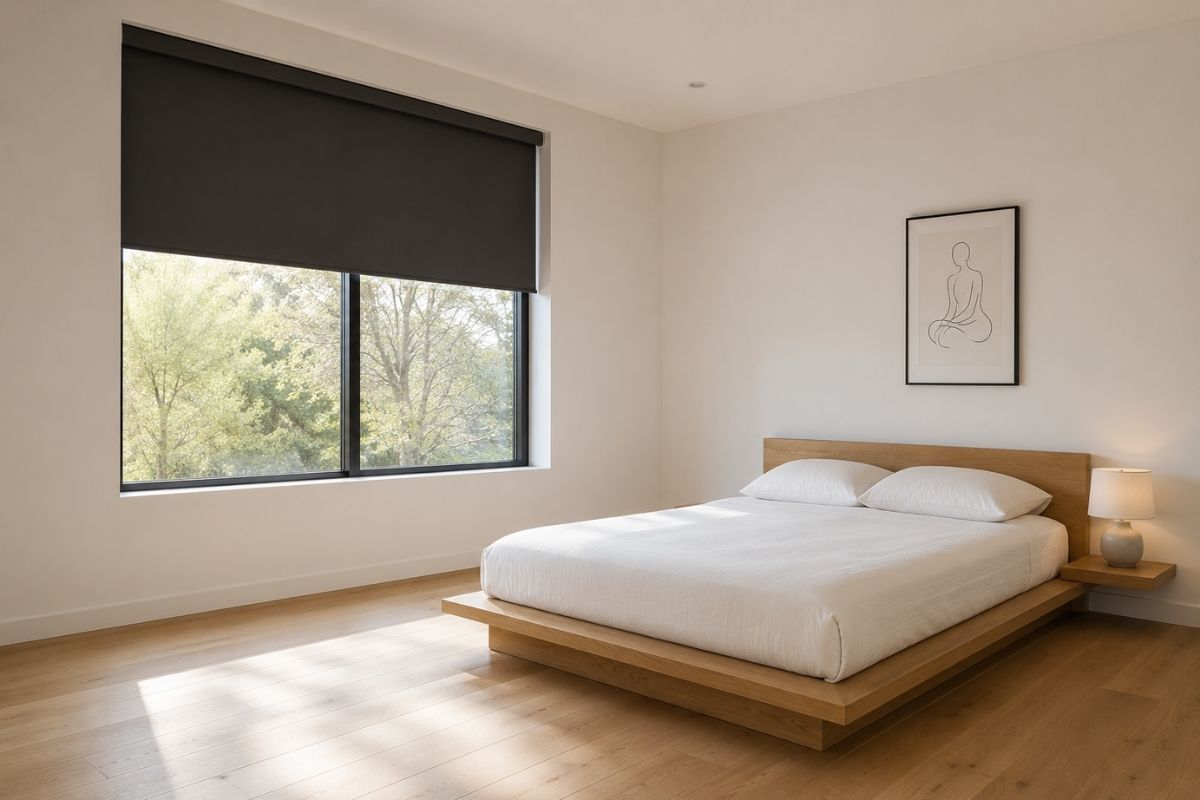
Minimalism vs Underfurnished
The most common failure of minimalist bedroom design is confusing minimalism with underfurnishing. A room with a bed, bare walls, a single overhead light, and no storage isn’t minimalist — it’s unfinished. It lacks the considered quality and visual calm that true minimalism achieves.
Minimalism in a bedroom means: every object present is there by deliberate choice. The furniture that exists is chosen for function and quality rather than accumulation. The surfaces are clear not because there’s nothing to put on them, but because what belongs there has been considered and everything else has been removed or hidden.
The difference is intentionality. An underfurnished room lacks things it should have. A minimalist room has everything it needs and nothing more.
The three minimalist principles for a bedroom:
- Maximum three tones in the palette (two neutrals, one accent)
- Furniture chosen for function, differentiated by material quality
- Every surface object deliberate — no passive accumulation
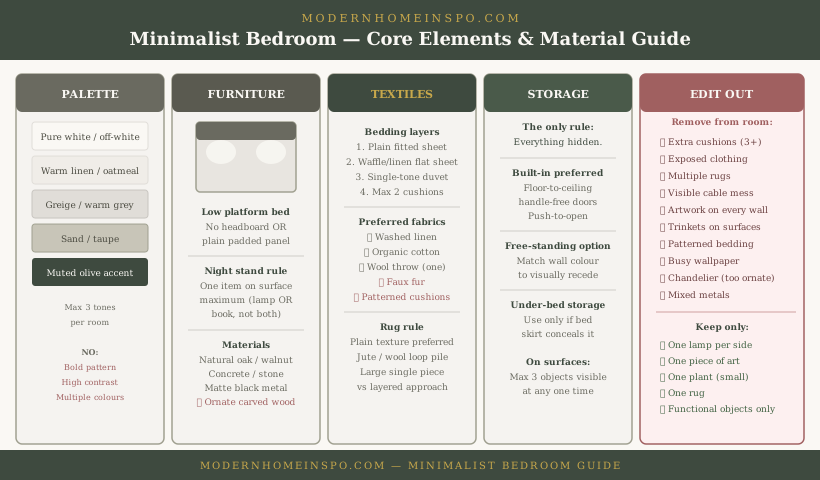
Palette and Colour
The Three-Tone Rule
A minimalist bedroom palette works with a maximum of three tones:
- Dominant (60%): The wall and ceiling colour. Usually a warm off-white, pale linen, or warm greige.
- Secondary (30%): Large furniture, floor, and bedlinen. A deeper tone in the same family, or a natural material (warm oak, concrete, stone).
- Accent (10%): One or two items that introduce contrast. Warm charcoal, dusty sage, terracotta, or muted navy.
The accent colour is often introduced through the throw, one cushion, or a ceramic object. Not through paint — in a minimalist room, accent paint is rarely necessary because the restraint of objects speaks loudly enough.
Warm vs Cool
Warm neutrals (off-white with yellow or pink undertones, warm greige, linen) feel more naturally comfortable and sleep-conducive than cool neutrals (pure white, blue-grey, cool stone). This is partly psychological and partly practical — warm tones in 2700K artificial light look rich and intentional, while cool tones can look grey and flat.
Cool minimalist palettes (white, pale grey, slate) work well in rooms with significant warm natural light, south-facing rooms, or alongside warm wood floors and furniture that introduce warmth through material.
What Colour Minimalism Isn’t
Minimalism doesn’t require white or near-white. A room painted in deep charcoal, olive green, or warm umber with simple white bedlinen and natural wood furniture is minimalist in its visual approach — low complexity, high quality, deliberate restraint. The colour is committed; the objects are edited. That combination reads as minimalism.
Furniture Selection
The Bed
A platform bed — low profile, clean edges, no ornate headboard — is the standard minimalist choice. It should appear to hover slightly above the floor, which creates a lightness that heavier traditional beds don’t achieve.
If an upholstered headboard is desired, choose a plain panel in a single material (boucle, bouclé-texture linen, or flat velvet in a muted tone). Avoid tufted, buttoned, or carved headboards — those details add complexity that minimalism resists.
Materials: Natural oak in a light or medium tone. Walnut for a warmer, darker room. Painted wood (matching wall or slightly darker) for a contemporary built-in effect. Matte black metal for a sharper, more contemporary look. Avoid: high-gloss finishes, chrome details, ornate moulding.
Bedside Storage
The minimalist approach to bedside storage: as little as possible. Options in order of visual clarity:
- Wall-mounted shelf: 30×30cm shelf at mattress height, with single hook below. The clearest visual solution.
- Small cube bedside table: Simple, borderless, floating or legged. One item on top (lamp or phone charger, not both).
- No bedside table: The lamp is wall-mounted, the phone charges in another room. Maximum restraint.
What Not to Add
Every additional piece of furniture in a minimalist bedroom requires justification. A bench at the foot of the bed: yes, if it’s used daily (shoes, clothes). No, if it becomes a clothes pile within a week. A chest of drawers: yes, if the wardrobe doesn’t provide enough storage. A second chair: almost never in a minimalist bedroom.
Storage That Disappears
Minimalist bedrooms require more storage planning than maximalist ones, not less. The visual calm comes from hidden clutter — everything stored is accounted for; nothing overflows.
Built-in wardrobe, flush doors: The ideal. Floor-to-ceiling doors that align with the ceiling line read as part of the architecture. Handle-free (push-to-open or recessed rail) prevents any visual break. Painted the same colour as the walls, the wardrobe effectively disappears.
Chest of drawers integrated: If freestanding, choose a chest of drawers in a finish that matches or closely coordinates with the wall (painted the same colour) to reduce its visual presence. Avoid high-contrast furniture — a dark chest against a white wall creates the visual interruption minimalism resists.
Under-bed storage: Acceptable if the bed has a solid base with drawers or a skirt that conceals them. Visible plastic storage boxes under a platform bed undermine the visual floor clearance that makes the bed look light.
Cable management: Visible cables are the enemy of minimalist rooms. Route cables through or behind furniture. A single cable conduit painted the wall colour is invisible. A power strip on the floor behind the bedside table is not.
Textiles and Bedding
The Bedding Approach
Minimalist bedding works through quality rather than quantity. One excellent duvet cover in washed linen or high-thread-count cotton percale does more than five layers of mediocre textiles.
The stack: Fitted sheet → duvet in plain cover → two sleeping pillows in matching cases. Optional: one throw across the foot, one additional decorative cushion. That’s it. The linen should be smooth enough to lie flat without constant adjustment.
Colour: White, off-white, or warm linen. Occasionally a muted tone (dusty blue, warm grey) as a full duvet colour. No patterns, no graphic prints, no stripes unless they’re very subtle.
Rug
One rug, large enough for the front legs of the bed and both bedside tables to sit on it (or none at all). Texture over pattern: jute, wool loop pile, or flat-weave in a natural tone. Avoid rugs with graphic patterns — they introduce visual complexity that the rest of the room is trying to remove.
Curtains
Floor-to-ceiling curtains in linen or heavy cotton, in a tone that matches or complements the wall colour. Hang the track or rod at ceiling height (not above the window frame) for maximum height. Blackout lining for sleep quality. The curtain should not be a statement — it should be present but quiet.
Lighting
Minimalist bedrooms need the same four lighting layers as any bedroom (ambient, bedside, vanity, accent) but delivered through the simplest possible fixtures.
Avoid: Statement chandeliers, ornate shades, industrial multi-bulb fixtures. These introduce visual complexity inconsistent with the approach.
Choose: Recessed ceiling (if budget and ceiling allow), a simple flush-mount, or a clean pendant in white, concrete, or brushed brass. Bedside: a simple cylinder wall sconce with a single bulb, or a slim-base table lamp with a plain shade. The fixture should be almost invisible — the light it produces is what matters.
Bulb temperature: 2700K throughout. Minimalist rooms with warm neutrals need warm light to look intentional rather than cold.
The Editing Process
The minimalist bedroom is achieved through subtraction as much as addition. The editing process:
Round 1 — Clear everything. Remove all objects from every surface. Remove all artwork from walls. Clear the floor except for furniture. Stand in the room and note how it feels. This is approximately the baseline you’re trying to return to while adding back only what’s necessary.
Round 2 — Return by function. Put back only what has a clear function: lighting, one book currently being read, the lamp, the alarm clock (or phone, not both). Look at each surface: if it requires more than three seconds to justify an item’s presence, it probably shouldn’t return.
Round 3 — Add visual quality. One piece of art (sized correctly for the wall). One plant. The throw and cushions. These are the elements that prevent the room from feeling empty. Each should be chosen with care — a large-format photograph in a simple frame, a real plant (not artificial), a cashmere or wool throw.
Round 4 — Photograph. A photograph reveals visual noise that the eye adapts to when present in the room. Look at the image: what draws the eye that shouldn’t? What creates visual clutter? Edit until the photograph looks like a room you’d want to spend time in.
The “Keep or Remove” Decision Criteria
Not everything is obvious. When an item is borderline, apply these tests:
The replacement test: If this item broke or disappeared tomorrow, would you replace it? If no — remove it now.
The eye-path test: When you stand in the doorway, does this item draw your eye in a way that’s useful? A plant or artwork can draw the eye deliberately. A bottle of lotion on the bedside table draws the eye accidentally.
The surface-as-a-whole test: Any surface with more than three visible items should be reassessed. Not as a rule — three items can still be wrong if they have no visual coherence, and five can be right if they form a considered composition. But three is the natural limit where most surfaces stay calm.
The category test: How many items in this category exist in the room? One book: fine. Seven books (three on the bedside table, two on the floor, two on the dresser): evidence of category accumulation. Minimalism doesn’t mean no books — it means one designated place for books, tidy, and not overflowing.
The cable test: Every visible cable fails the minimalist bedroom test by default. No item that requires a visible cable should be on a bedroom surface unless that cable is completely managed (in conduit, behind furniture, or routed out of sight). This is often the single biggest practical improvement in a partially-edited room.
Minimalism is not a destination — it’s an ongoing practice of noticing what accumulates and deciding what stays.
Frequently Asked Questions
- How do I make my bedroom look minimalist?
- Start by removing everything from all surfaces. Put back only what is functional or genuinely beautiful (and preferably both). Close all storage. Fix all lighting to 2700K warm white on dimmers. The room should feel immediately calmer — anything that re-introduces visual noise should be reconsidered.
- What is the minimalist bedroom colour?
- Warm off-white, linen, and warm greige (grey-beige) are the most successful minimalist bedroom colours. Pure white works in rooms with warm natural light; in rooms with north light it reads as cold. Accent colours in a minimalist palette should be muted: dusty sage, soft terracotta, or warm charcoal rather than saturated tones.
- Can a minimalist bedroom have colour?
- Yes. Minimalism refers to visual complexity, not colour. A room painted in deep forest green with white bedlinen and natural wood furniture is minimalist in its approach — limited objects, clear surfaces, considered palette. What a minimalist room avoids is multiple competing colours and patterns.
- What furniture goes in a minimalist bedroom?
- A platform bed (low profile, simple lines), two bedside tables or wall-mounted shelves, and concealed storage (built-in wardrobes or a chest of drawers that blends with the wall). A single armchair is acceptable in larger rooms. Everything should be chosen for function first, with material quality as the differentiator.
- How many cushions on a minimalist bed?
- Two sleeping cushions plus one or two decorative cushions maximum. Often just the sleeping pillows in plain cases, folded neatly. The more restrained the textile arrangement, the more the quality of the bedlinen matters — invest in good washed linen or percale.