Seasonal Bathroom Decor Swaps That Are Actually Worth Doing
Quick Answer
The bathroom decor swaps most worth doing seasonally: towels and bathmats (texture and color, laundered fresh seasonally), a plant swap (lighter ferns in summer, succulents in winter), a candle change (lighter scents in spring and summer, warmer and spicier in autumn and winter), and small object edits (a ceramic piece, a jar of bath salts). These four categories refresh a bathroom completely without any renovation.
Why Bathroom Swaps Work
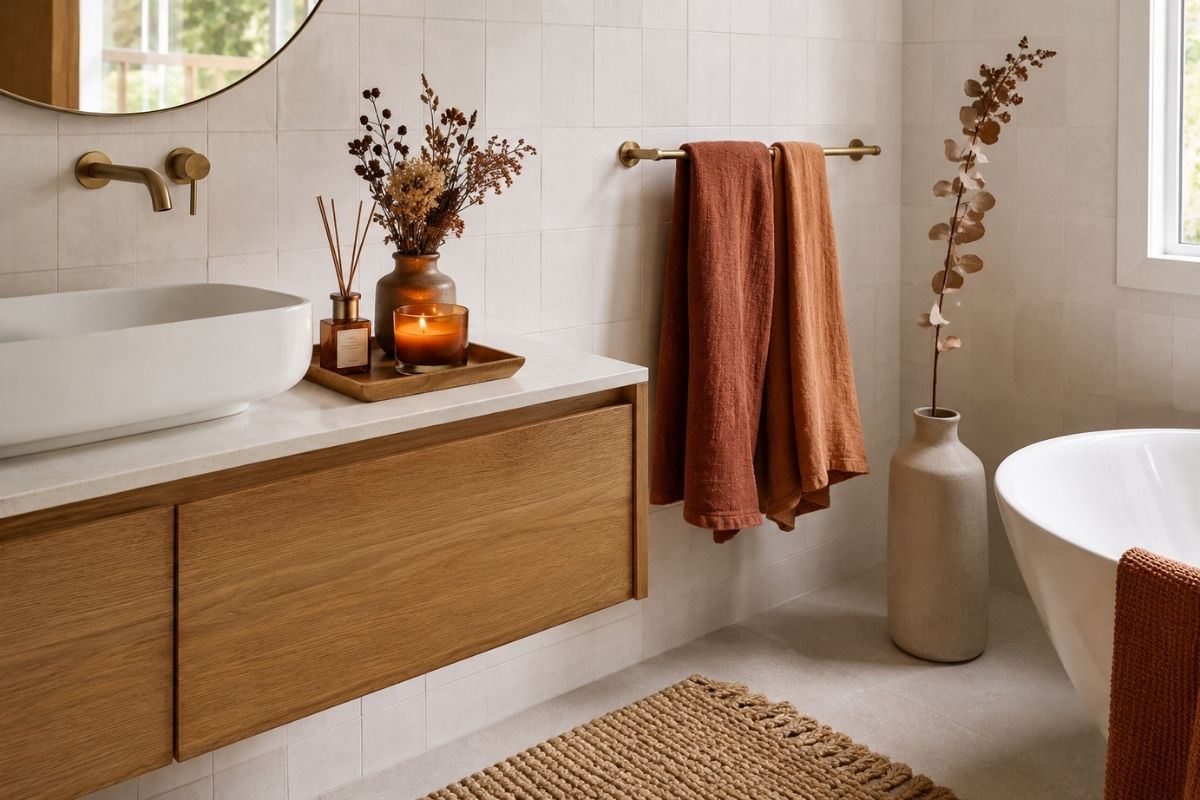
The bathroom is the room where seasonal decor swaps have the most impact per square foot. It is a small room with few large fixed elements — the walls, tiles, vanity, and fixtures are fixed — which means the movable elements (towels, plants, candles, small objects) account for a higher proportion of the room’s visual character than in any other room.
A bathroom with crisp fresh towels, a healthy plant, a lit candle with a seasonal scent, and two or three well-chosen surface objects on the vanity reads as designed and considered. The same bathroom with old discolored towels, no plants, no candle, and a cluttered accumulation of toiletry bottles on the vanity reads as neglected.
Seasonal swaps are the minimum viable refresh — they reset the room to considered and curated with minimal cost and no renovation.
Textiles: Towels and Bathmats
Towels are the single highest-impact bathroom decor element. They occupy significant visual surface area, are frequently touched, and their condition communicates the care given to the room.
Seasonal textile approach:
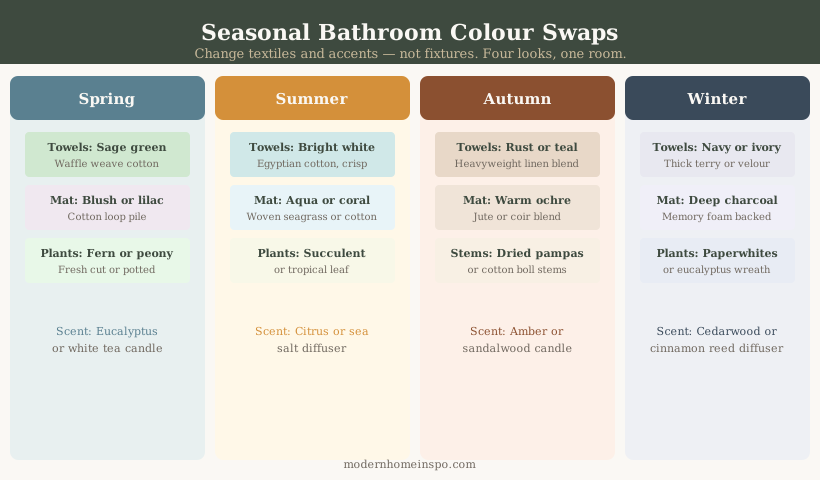
Autumn/winter: Heavier weight towels in warm tones — rust, terracotta, deep olive, warm charcoal, mushroom. Egyptian cotton or Turkish cotton in higher GSM (grams per square meter — 600–700 GSM is a luxuriously thick towel). The weight and warmth of the towel suits the season.
Spring/summer: Lighter weight towels in cooler or lighter tones — natural linen, pale sage, warm white, light natural. A lighter GSM (400–500) dries faster and feels lighter in warmer months.
Practical management: Having two complete sets of bathroom textiles — one warm-toned for autumn/winter, one lighter for spring/summer — allows a complete seasonal refresh that feels significant. Wash both sets at the seasonal change.
Bathmats: Swap on the same schedule as towels. A bathmat in a coordinating tone (not necessarily matching — a slightly different tone within the same palette creates interest) ties the textile scheme together.
Towel storage: Rolled towels in a basket or folded on an open shelf are visible as decor elements. White or pale-toned baskets in natural fiber (seagrass, rattan, cotton rope) work in most bathroom palettes.
Plants
A living plant in a bathroom adds organic warmth and seasonal variation that is impossible to achieve with any other decor element.
Humidity advantage: Bathrooms are naturally humid — showers and baths create a consistently moist atmosphere that tropical plants thrive in. Many houseplants that struggle in dry indoor air grow better in a bathroom than anywhere else in the home.
Light consideration: Most bathrooms have limited natural light. Choose shade-tolerant plants; most flowering plants require more light than a typical bathroom provides.
Best bathroom plants:
Ferns: Boston fern, asparagus fern, maidenhair fern. Ferns thrive in bathroom humidity and add a fresh, organic quality. They need some indirect natural light but not direct sun.
Pothos: Extremely tolerant of low light and irregular watering. Trails attractively from a shelf or hung pot.
Peace lily: Tolerates low light and appreciates the bathroom humidity. Produces white flowers periodically with adequate indirect light.
ZZ plant: Nearly indestructible in low-light conditions. Glossy dark leaves add structure.
Seasonal plant swap:
- Spring/summer: lighter, fresher plants — ferns, pothos, trailing plants near the window
- Autumn/winter: more structural plants — a dark-leaved ZZ plant, a snake plant, or a single branch of eucalyptus in a vase (fragrant, lasting, effective)
Eucalyptus branches: A bunch of fresh or dried eucalyptus hung from the shower head or placed in a vase is one of the simplest and most impactful bathroom additions — fragrant, visually effective, and seasonal.
Scent and Candles
Scent is the most powerful seasonal signal in a bathroom — a scent change is immediate, deeply sensory, and fundamentally shifts the room’s atmosphere.
Candles: A single candle in a quality ceramic, glass, or tin vessel on the vanity or a shelf is both a visual and olfactory element. Keep only one candle lit at a time — competing scents in a small bathroom are overwhelming.
Seasonal scents:
Spring: Green tea, white tea, fresh linen, cucumber and mint, light florals (peony, magnolia), eucalyptus.
Summer: Citrus (lemon, grapefruit, bergamot), sea salt and driftwood, coconut, tropical florals.
Autumn: Fig, apple and spice, sandalwood, amber, oakmoss, warm woods, light smoke.
Winter: Cedar, pine, oud, amber and vanilla, clove and orange, vetiver.
Candle quality note: Low-quality candles with synthetic fragrance can produce soot and an unpleasant chemical scent note that undermines the purpose. Soy or coconut wax candles with natural fragrance oils burn cleaner and smell better. Paraffin wax with heavy synthetic fragrance is the category to avoid.
Reed diffusers: A reed diffuser runs continuously without lighting and is useful for maintaining a consistent background scent. Change the fragrance at seasonal transitions.
Design Tip
Replace candles entirely when changing seasons rather than burning them interchangeably. A summer scent candle in November and a winter scent candle in June both create a seasonal cognitive dissonance that undermines the purpose of the swap. Seasonal scent is powerful specifically because it is consistent.
Small Objects and Surfaces
The vanity top and any open shelving are the most editable surfaces in the bathroom.
The rule: The vanity top should have only intentional items. All toiletry bottles, toothbrushes, and daily-use items should be in drawers or in a cabinet — not displayed on the surface. The objects on the surface are decorative or semi-functional decor items.
Typical vanity display items:
- A soap dish or pump soap dispenser in ceramic, stone, or glass
- One small plant or a vessel with eucalyptus branches
- A candle
- One additional small object (a small ceramic bowl for jewelry, a glass bottle with bath salts)
Seasonal swaps at the vanity:
- Replace a summer pump soap in a clear bottle with an autumn amber glass soap dispenser
- Swap a succulent for a small fern as humidity increases in autumn
- Replace pale summer ceramics with darker, warmer autumn tones
- Add a small tray (marble, ceramic, or brass) to group and contain the objects
Keeping it minimal: A bathroom vanity with more than four or five distinct objects reads as cluttered. In a small room, less is always more — one well-chosen ceramic piece and a candle reads as considered; seven small objects in varying styles reads as an accumulation of toiletry shopping.
Lighting Adjustments
Bathroom lighting is rarely changed seasonally, but small adjustments can enhance seasonal character.
Bulb temperature: If the bathroom uses a standard overhead light, ensure the bulb is 2700K warm white. The warmer light temperature is particularly effective in autumn and winter, when the bathroom is used more in the dark and the warmth of the light contributes to the cozy atmosphere.
Adding a candle: A lit candle in the bathroom during a bath creates a lighting effect that cannot be achieved with any electric fixture — the flicker, the warm amber glow, and the movement of the flame. In autumn and winter, a candlelit bath is a seasonal ritual.
Dimmer on the overhead: If possible, install a dimmer on the bathroom overhead light. The ability to reduce overhead brightness to approximately 40% while a candle or candles are lit transforms the bath experience.
Season-by-Season Guide
Spring
Swap heavy towels for lighter linen or cotton in pale sage, warm white, or natural linen. Replace any winter evergreen branches with a small fern or pothos. Transition the candle to a fresh green or floral scent. Refresh the soap dispenser — a clean glass or pale ceramic pump. Add a small vase with fresh spring flowers from a garden or market.
Summer
Lightest towels and bathmats — lowest GSM, palest tones or natural linen. A trailing plant if the bathroom has adequate light — pothos or a small vase of eucalyptus or herbs from the garden. Citrus or sea-inspired candle scent. Remove winter-weight objects; keep the surfaces spare and light.
Autumn
Replace lightweight summer towels with heavier, warmer-toned alternatives — rust, warm charcoal, deep olive. Bring in a more structured plant — a snake plant or small fern. Transition to warmer scents — fig, amber, warm woods. Add a small tray in brass or ceramic to group the vanity objects more formally. A darker or warmer ceramic soap dispenser.
Winter
Heaviest towels in warmest tones. Eucalyptus branches or dried botanicals in a vase. Warm and complex candle scent — cedar, oud, amber. Small objects in warmer materials — brass tray, dark ceramic, stone. A small amount of seasonal decoration if wanted — a sprig of holly or dried citrus slice — without overcrowding the surface.
Frequently Asked Questions
- Is it worth changing bathroom decor seasonally?
- Yes, if the swaps are in low-investment, high-impact categories: textiles, plants, scent, and small surface objects. These four categories can completely transform the atmosphere and character of a bathroom without renovation, and the items are inexpensive enough that seasonal rotation is financially realistic.
- What is the easiest bathroom decor swap?
- New or freshly laundered towels in a seasonal color or texture. A set of towels in a warm rust or deep olive for autumn/winter, replaced with lighter natural linen or pale sage for spring/summer, costs under $50 for a complete bathroom set and makes an immediate and significant difference.
- Which plants work best in a bathroom?
- Bathrooms are typically humid and lower-light environments. Best bathroom plants: ferns (Boston fern, asparagus fern), pothos, peace lily, spider plant, and ZZ plant for very low light. All of these tolerate or thrive in bathroom humidity and do not require direct sun.
- What candle scents work in a bathroom?
- For spring and summer: fresh and light scents — eucalyptus, mint, lemongrass, white tea, cucumber, green tea. For autumn and winter: warmer and denser scents — sandalwood, cedar, amber, vanilla, fig. Avoid very sweet or heavy gourmand scents in a bathroom, which can feel cloying in a small humid space.