Spa Bathroom Ideas: How to Create a Genuine Retreat at Home
Quick Answer
A spa bathroom is created through five sensory elements: (1) natural materials that develop character — stone, timber, linen; (2) warm lighting at 2200–2700K from multiple sources with a dimmer; (3) a large walk-in shower or deep soaking bath as the primary feature; (4) scent through diffuser or candles (eucalyptus, sandalwood, or lavender); (5) live plants and silence — no visible technology, no TV screen. The palette should be drawn from nature: warm stone, warm grey, sage, and dark forest tones. Underfloor heating is non-negotiable.
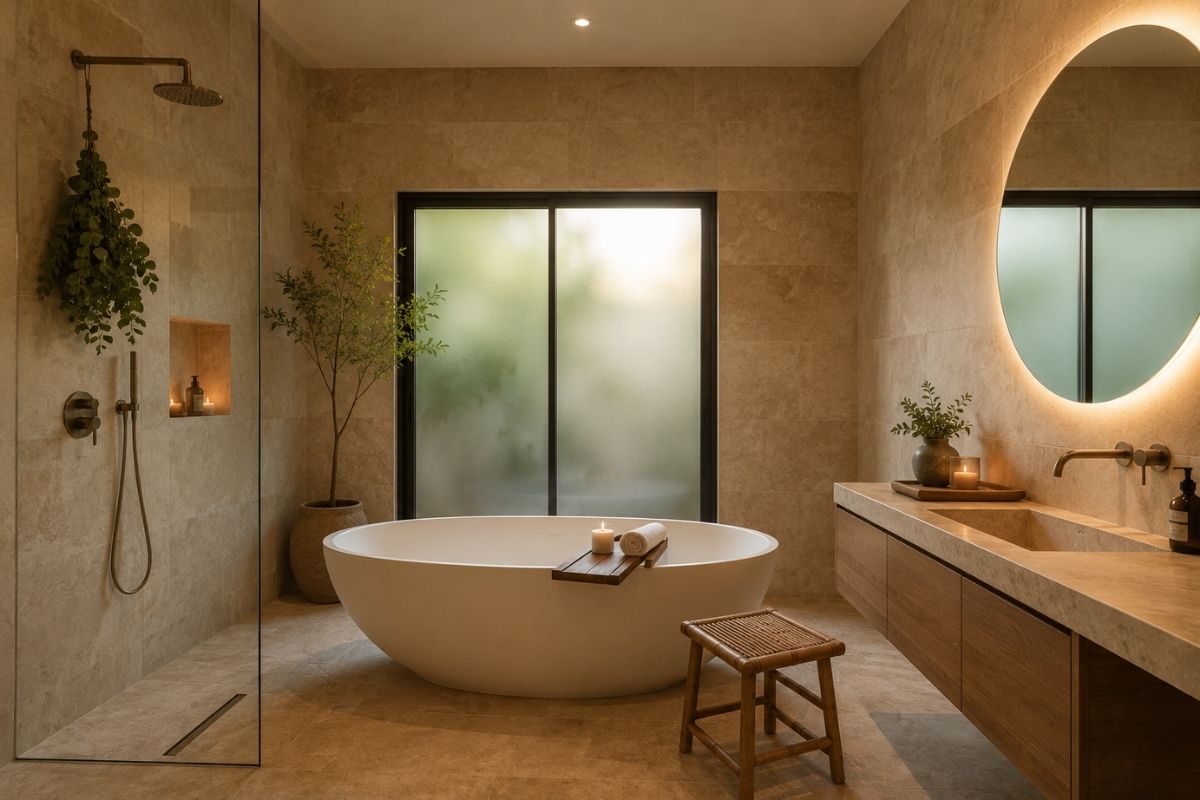
The word ‘spa’ in the context of a home bathroom is often used to mean ‘expensive-looking’ — which misses the point. A genuine spa experience is not primarily about luxury fittings; it’s about the quality of sensory experience. A warm stone floor, warm amber light, the smell of eucalyptus, the sound of water, and the absence of anything cold, clinical, or digitally demanding — these create a restorative environment. You can achieve this in a modest bathroom with deliberate material and sensory choices, or fail to achieve it in a large, expensively fitted bathroom with the wrong palette and lighting.
Material Language
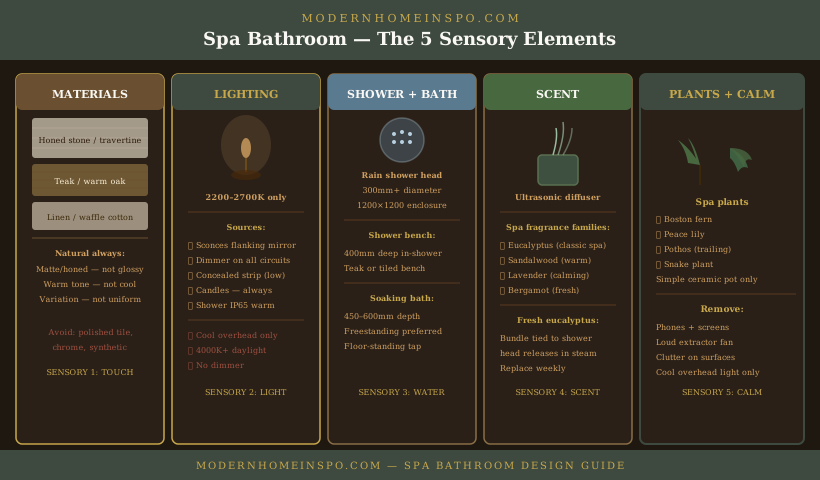
Spa materials share two qualities: they are natural (or authentically natural in appearance), and they develop character rather than deteriorating.
Stone and stone-effect tile
The floor and wall material sets the sensory tone before any other element. Warm travertine, creamy limestone, and soft warm marble (or convincing large-format porcelain equivalents) all create a sensory baseline of natural warmth.
The finish must be honed or matte — never polished or high-gloss. A high-gloss tile reflects light harshly and reads as cold and clinical. A honed stone absorbs and diffuses light, reads as warm, and feels softer underfoot.
Timber
A timber element in a bathroom — a wooden bath mat, a teak or iroko shower bench, a floating vanity in warm oak — brings organic warmth that stone alone cannot produce. In a fully stone-tiled bathroom, one timber element grounds the space in nature.
For wet areas: teak, iroko, or bamboo are moisture-resistant and suitable for shower use without finishing. For vanity surfaces: oil-finished or hardwax-oiled oak.
Linen and natural textiles
Waffle cotton or linen-mix bath towels in warm white, natural linen, or sage green. The tactile quality of towels — a rough waffle weave, a deeply looped terry — is part of the sensory experience. Avoid microfibre or synthetic towels in a spa bathroom; they feel wrong regardless of colour.
A linen or cotton bathrobe on a hook (visible, not stored away) signals the hospitality-quality intent of the space.
Lighting for Spa Quality
Lighting is the most important single element of the spa experience. All sources at 2200–2700K — no source above 3000K. A dimmer on every circuit is non-negotiable: the evening bath experience happens at very low light, just the candles and a concealed strip at vanity base. For mirror sconce sizing, IP zone requirements (IP65 in the shower, IP44 in Zone 2), and the full layered lighting specification, see Bathroom Lighting Ideas.
The key sensory shift: when the dimmer drops to 20% and candles are lit, the bathroom stops functioning as a utility space and becomes a restorative one. This is the spa quality that cannot be achieved with a fixed overhead grid alone.
The Shower Zone
A spa shower is larger than a standard shower and better equipped. Minimum 1200×1200mm. Ideally 1500mm on at least one dimension.
Rain head positioning
A ceiling-mounted rain head (300mm+ diameter) provides full-body coverage. Position the head at the end of the shower away from the glass panel — so entry doesn’t require ducking under the flow. Height: minimum 2100mm from floor to ceiling head.
Secondary handshower
A flexible handshower on a slider rail provides body-directed flow and practical hair washing. Position on the side wall perpendicular to the rain head.
Steam shower
A steam generator (fitted to the shower enclosure, which must be fully sealed) adds the full spa experience. Requires: a sealed enclosure without draughts (no ventilation gap), a sloped or domed ceiling to prevent condensation dripping, and a specialist generator unit sized to the enclosure volume. Cost: £1,000–3,000+ including installation.
Shower bench
A teak or built-in tiled bench inside the shower is the most underused spa shower feature in residential bathrooms. It allows sitting, foot-washing, and the use of scrubs and oils in comfort. In a 1500mm shower, a bench 400mm deep on one side still leaves 1100mm of standing space.
Niche storage
A recessed niche tiled in the same material as the shower walls holds products without visual clutter. In a spa shower, the niche should hold three items maximum — one body wash, one shampoo, one conditioner. The spa quality depends on surfaces being clear of objects.
The Soaking Bath
If the room is large enough (8m²+ with proper clearances), a soaking bath elevates the bathroom beyond the functional into the genuinely restorative.
Depth
Standard baths are 430–450mm deep — not deep enough to fully submerge the body. Japanese-style deep soaking baths (450–600mm internal depth) allow full shoulder-depth immersion with a shorter length (1200–1400mm) than a standard bath. The soaking quality is significantly different.
Freestanding vs built-in
A freestanding bath in a central position is the spa centrepiece — visible from the door, surrounded by space, requiring nothing to complete it visually except a wall-mounted tap spout and a floor-standing mixer tap. This creates the hotel suite quality.
A built-in bath with a tiled deck is more practical (storage on the deck, easier to clean around) but reads as a fitted element rather than a sculpted object. Both work.
Bath surroundings
- Freestanding floor-standing tap in the same hardware finish as the room
- A tray or small stool beside the bath for candles, a glass, a book
- A bath pillow in linen or waterproof foam
- Herringbone bath mat on the floor: teak, cotton, or a stone-effect mat
Sensory Elements
Scent
Scent is the most immediate sensory signal of a spa environment. Eucalyptus (the defining spa scent — clean, medicinal, refreshing), sandalwood (warm, grounding), lavender (calming), and bergamot (fresh, bright) are the core spa fragrance families.
Delivery: an ultrasonic diffuser positioned where the mist is visible as you enter the room. Alternatively, a bundle of fresh eucalyptus tied to the shower head (replenish weekly) releases essential oils in the shower steam — the simplest and most effective spa scent method.
Sound
Running water (shower, bath tap) is inherently spa-like. The absence of other sounds — no exhaust fan roar, no smart speaker, no TV — is the spa sound environment. If the bathroom ventilation is loud, replace the extractor with a higher-quality, low-noise unit.
A Bluetooth speaker (waterproof, hidden behind a grille or above a cabinet) for quiet ambient sound — spa music, rain sounds, or silence — is a legitimate addition if it replaces the sound of a phone propped on the basin.
Live plants
Three to five plants positioned where they receive indirect light from a window. Bathrooms are naturally humid — shower steam creates the moisture that tropical plants thrive on, so plants that struggle elsewhere in the home often grow better here. Use simple white or warm grey ceramic pots; no coloured plastic. For species selection, seasonal rotation, and the eucalyptus-on-shower-head method, see Seasonal Bathroom Decor Swaps.
Thermal comfort
Underfloor heating on a timer: warm floor at wake-up and before the evening bath. A heated towel rail providing a warm, dry towel. The physical thermal comfort is an underrated component of the spa quality — cold floor, cold towel = not a spa, regardless of decor.
Spa Quality in Smaller Rooms
A genuinely spa-like bathroom is achievable in rooms as small as 4–5m² by concentrating on the sensory priorities:
Select two spa elements, not all of them
In a small bathroom: a very good walk-in shower with a rain head + good dimmer lighting + one plant. These three elements, executed well, are more spa-like than a room with six poorly executed elements competing for space.
Remove technology
Phones, tablets, and visible electrical cables are the antithesis of the spa experience. A small spa bathroom has nowhere visible for a phone to sit — by design. The bath or shower is an off-grid zone.
Concentrate on the floor and lighting
The floor (a large-format warm stone-effect tile) and the lighting (2700K with a dimmer) are felt before they’re seen. Getting these two elements right creates the spa baseline even in a modest bathroom, while keeping all other elements standard.
Scent does the work budget can’t
A eucalyptus diffuser (£30–50) and a bunch of fresh eucalyptus on the shower head transform the sensory experience of any bathroom for minimal cost. Scent communicates spa quality faster and more directly than any visual element.
Frequently Asked Questions
- What makes a bathroom feel like a spa?
- Natural materials, warm lighting from multiple sources (not overhead only), scent (diffuser or candles), and the absence of visual clutter and technology. The spa quality comes from engaging multiple senses calmly simultaneously — warm stone underfoot, warm light at eye level, a faint scent, the sound of water, and tactile warmth from heated towels. Remove anything that creates visual noise or domestic mundanity.
- What is the best tile for a spa bathroom?
- Natural stone in warm tones — travertine, limestone, warm marble — or large-format stone-effect porcelain in 600×1200mm or larger. The key qualities: natural variation in the surface (no two tiles identical), a matte or honed finish (no gloss), and a warm tone (beige, cream, warm grey). Cold, uniform, high-gloss tiles are the opposite of spa material language.
- Do I need a bath for a spa bathroom?
- No. A large, well-designed walk-in shower (1200×1200mm minimum, with a rain head, good water pressure, and steam capability if possible) can be more spa-like than a modest bath. The bath becomes important if soaking is a core part of the routine — otherwise, invest the space and budget in a generous shower.
- What plants work in a spa bathroom?
- Plants that tolerate humidity and low-to-medium light: pothos, peace lily, fern (particularly Boston fern), orchid, and snake plant. These are the plants found in actual spa environments. Avoid cacti and succulents (they need dry conditions), and use simple ceramic or stone pots — nothing decorative or coloured.